
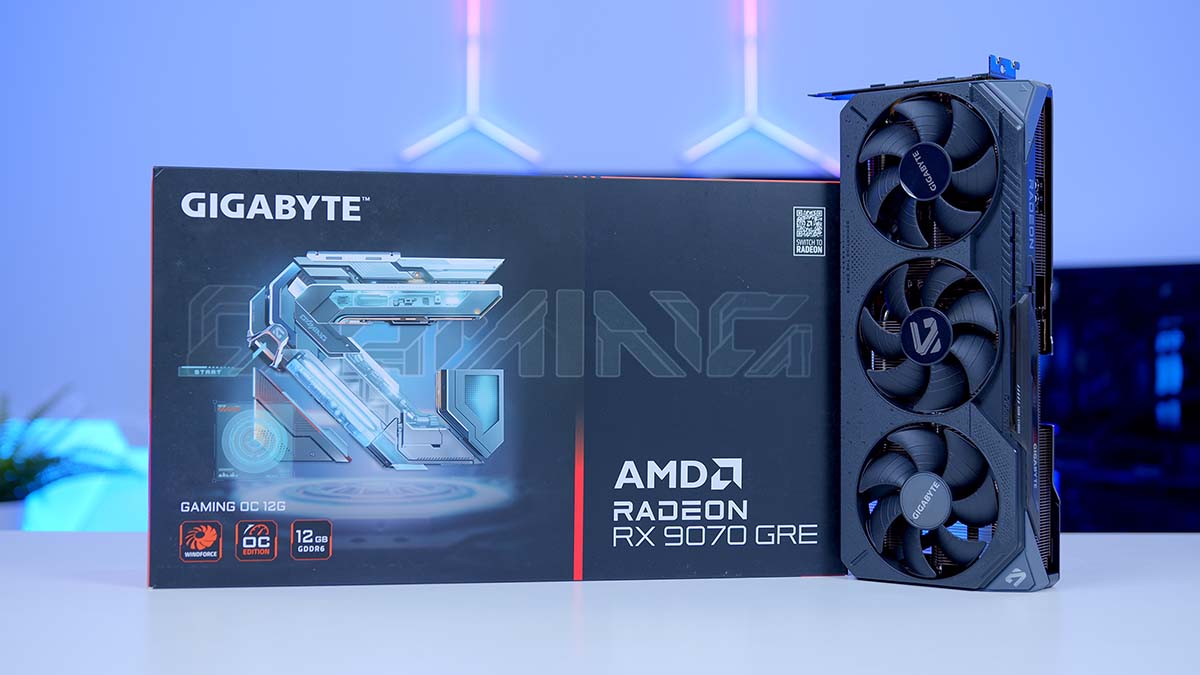
For what feels like the first time in an age, we finally have a new GPU launch! Well, sort of. As some of you may know, the RX 9070 GRE has actually been around for a little while now but solely as a China exclusive model. With this latest announcement from AMD at Computex, however, the RX 9070 GRE is now making its way to the rest of the world and is set to fill the void between the RX 9060 XT 16GB and RX 9070 in the RDNA 4 line-up.
Specification
The GRE is the first 9070 class card to turn up with 12GB of GDDR6 rather than the 16GB found on the 9070 and 9070 XT, and it sits on a narrower 192-bit bus with slightly slower 18Gbps memory. For 1440p, 12GB should still be plenty in most modern games, but it is worth keeping half an eye on as VRAM demands keep climbing. The GRE does, however, run the same Navi 48 silicon as the RX 9070 and 9070 XT. The only real difference is how much of that chip is actually switched on. On the GRE you are getting 48 Compute Units, down from the 56 on the RX 9070, which works out to 3,072 Stream Processors, plus 48 ray accelerators and 96 AI accelerators.
Radeon RX 9070 GRE Specifications
- Model AMD Radeon RX 9070 GRE
- Architecture AMD RDNA 4
- GPU Navi 48 (4nm)
- Compute Units 48
- Stream Processors 3,072
- Ray Accelerators 48
- AI Accelerators 96
- Boost Clock Up to 2.79 GHz
- Memory 12GB GDDR6
- Memory Speed 18 Gbps
- Memory Interface 192-bit
- Memory Bandwidth 432 GB/s
- Infinity Cache 48 MB
- Board Power (TBP) 220W
The current market constraints are clear to see at first glance, spec wise, but it’s not all doom and gloom. Clock speeds are healthy on the RX 9070 GRE, with a base (or game) clock of 2.22GHz, up from the 2.1GHz of the RX 9070. Boost clocks are up to 2.79GHz too, a fair bit higher than the 9070’s 2.54GHz. AMD is clearly using clock speed to win back some of the ground it loses to those material cutbacks.
GPU Comparison
Radeon RX 9070 GRE vs Key Rivals
Hover rows for highlight. Tap/click a header title to sort.
| ⠿ GPU | ⠿ ::Architecture | ⠿ ::Boost Clock | ⠿ ::Memory | ⠿ ::Memory Bus | ⠿ ::Memory Bandwidth | ⠿ ::Board Power | ::Where to Buy |
|---|---|---|---|---|---|---|---|
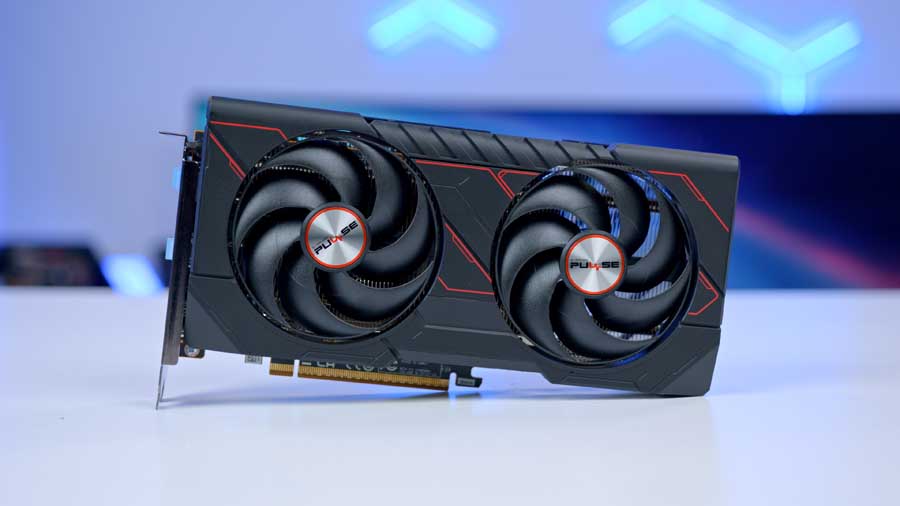
AMD Radeon RX 9060 XT 16GB RDNA 4 mainstream 1440p option |
AMD RDNA 4 | Up to 3.13 GHz | 16GB GDDR6 | 128-bit | 320 GB/s | 160W | |
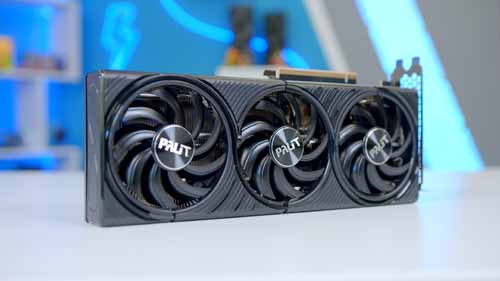
NVIDIA GeForce RTX 5060 Ti 16GB Blackwell rival at a similar price |
NVIDIA Blackwell | Up to 2.57 GHz | 16GB GDDR7 | 128-bit | 448 GB/s | 180W | |
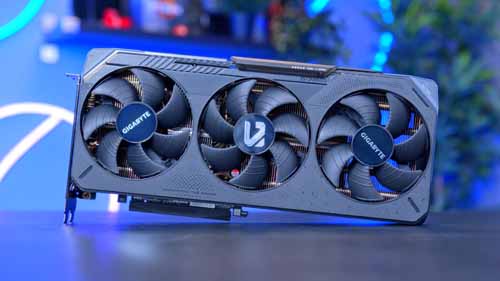
AMD Radeon RX 9070 GRE The card reviewed here, new for global markets |
AMD RDNA 4 | Up to 2.79 GHz | 12GB GDDR6 | 192-bit | 432 GB/s | 220W | |

NVIDIA GeForce RTX 5070 Blackwell card with 12GB GDDR7 |
NVIDIA Blackwell | Up to 2.51 GHz | 12GB GDDR7 | 192-bit | 672 GB/s | 250W | |
|
AMD Radeon RX 9070 Step up in the RDNA 4 stack with 16GB |
AMD RDNA 4 | Up to 2.54 GHz | 16GB GDDR6 | 256-bit | 640 GB/s | 220W |
Power is rated at 220W TBP (Total Board Power), exactly the same as the RX 9070 and like the rest of the 9070 family, the GRE sticks with a pair of standard 8-pin PCIe power connectors rather than the 12V-2×6 connector found on the NVIDIA side, which keeps things simple if you are reusing an existing power supply.
You also get the full RDNA 4 feature set, including FSR 4 (FidelityFX Super Resolution), AMD’s machine-learning upscaler. In its current iteration it is the strongest FSR has ever been, bringing sharper image quality, better stability and reduced ghosting over the older FSR 3.1, while the newer FSR 4.1 update pushes things a step further again. Currently supported by a steadily growing list of games, you can force it on in plenty of titles through the Adrenalin software, which is a handy way to claw back frames in more demanding scenarios.
On paper, then, the GRE looks like an interesting proposition if nothing else and much a result of the market landscape that we find ourselves in currently. Here’s to hoping it wont be to it’s detriment.
Architecture
Architecturally the GRE is built on the same RDNA 4 platform as the rest of the RX 9000 Series cards. The GRE uses the same generation of compute units, ray tracing accelerators and AI accelerators as its more expensive siblings, and the only real difference is capacities and counts, generationally they’re identical. If you’ve read our RX 9070 or 9070 XT reviews, a lot of the architecture talk will ring a bell. For those who are new, the TLDR is that AMD sat out the halo GPU race this time around, putting RDNA 4’s focus on mainstream value, and the GRE further enforces that. AMD have had a clear focus on the 1080p and 1440p resolutions this generation, and as the prices of the current crop of RDNA 4 GPUs continue to creep up, the introduction of the more budget friendly 1440p GRE to the line-up only steadies the pricing swing and further reinforces AMD’s stance.
From Our Full Review
☆☆☆☆☆
3.5/5

Pros and Cons
Pros
- Competitive pricing vs RTX 5070
- Outperforms the 5070 in most games
- Strong 4K performance
Cons
- Struggles with ray tracing without Frame Gen
- Gaming OC design is simplistic
- RX 9070 XT as competition
Bottom Line
A mixed bag, but a likeable one. The RX 9070 outperforms the RTX 5070 in almost every game and puts in a surprisingly strong 4K showing for what is really a 1440p card, which makes the equally priced RTX 5070 hard to recommend over it. The catch is the RX 9070 XT sitting just $50 above it, a noticeably better card that leaves the standard 9070 in an awkward spot. The gaming performance is excellent, but AMD needs to rethink the pricing.
Read The Full ReviewRaytracing is one of the bigger RDNA 4 talking points, and the good news is this is the generation where Radeon ray tracing has finally become usable in the mid-range, rather than something you flick on and instantly regret. FSR 4 in particular is one of the key driving forces behind this change. FSR 4 is AMD’s first machine-learning-based upscaler, and is a clear step up versus the AI-less FSR 3.1 and results in sharper image quality, better stability and a lot less ghosting. The key thing to note is that FSR 4 is limited to RDNA 4 GPUs in a similar fashion to DLSS 4 and RTX 5000 NVIDIA GPUs and while FSR has played second fiddle to NVIDIA DLSS for a while now, FSR 4 goes a good way to rectifying this.
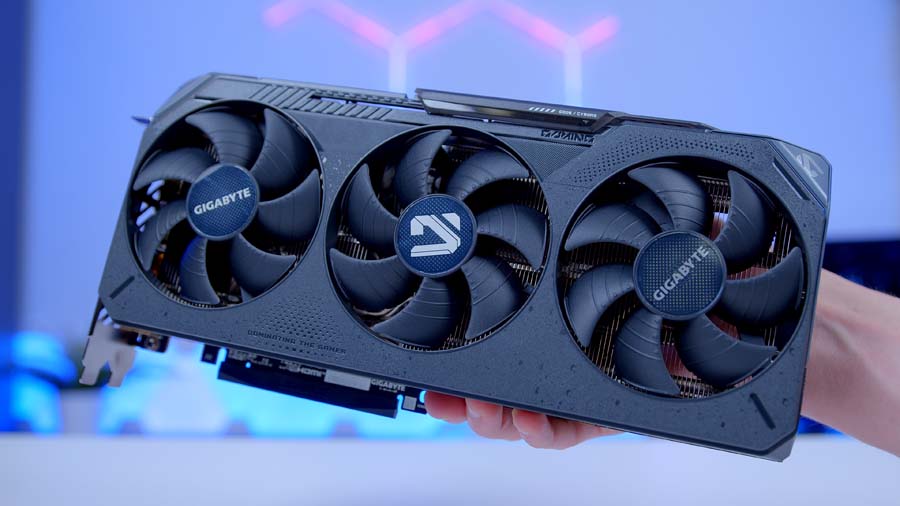
Outside of upscaling, the GRE gets the full RDNA 4 software stack. AMD Fluid Motion Frames (AFMF) 2.1 handles driver-side frame generation that works in just about any game, while in-game Frame Generation and the one-click HYPR-RX toggle are there for anyone who just wants things to feel smoother without digging through menus.
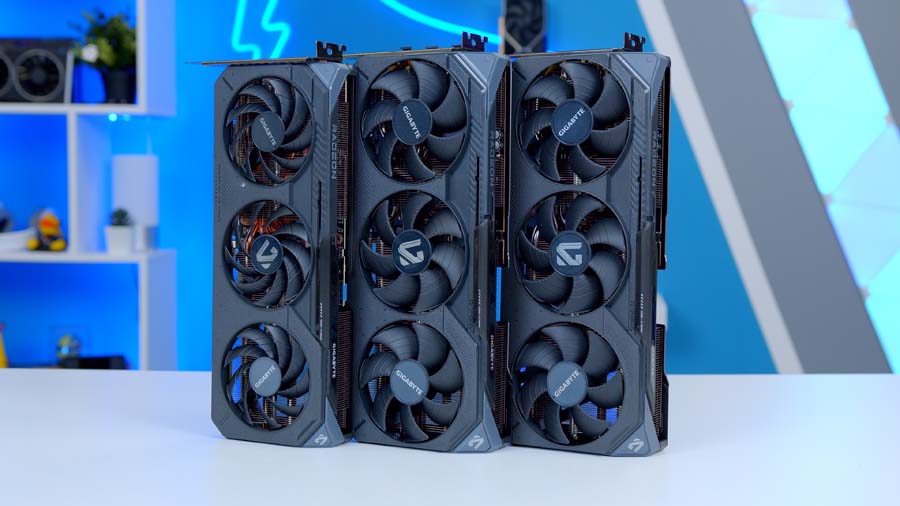
Performance
The RX 9070 GRE may just be the epitome of 1440p GPUs. Across everything we tested at 1440p it stayed in triple digits. 136.8 FPS in Arc Raiders, 132 FPS in Battlefield 6 and 115.6 FPS in Cyberpunk 2077. Drop down to 1080p and there’s plenty of headroom to spare.
The GRE pushed 168.6 FPS in Cyberpunk 2077 and 157.1 FPS in Marvel Rivals, the latter putting it second only to the RX 9070 in that test and comfortably ahead of the RTX 5060 Ti 16GB. In Cyberpunk its 1% lows actually edged ahead of quicker cards like the RTX 5070 and RX 9070, so the frame pacing holds up nicely. The one title that didn’t play ball was Hogwarts Legacy, where the NVIDIA cards and the RX 9070 stretch their legs far harder at 1080p and the GRE’s 1% lows dip lower than we’d like,
4K is where things get a little ropier. In the heavier raster tests it sat around 57.7 FPS in Cyberpunk 2077, 60.3 FPS in Marvel Rivals and 69.3 FPS in Hogwarts Legacy, 4K High is playable rather than comfortable. With 12GB of memory on a 192-bit bus, this was always going to be the resolution where the GRE runs out of steam, and it’s where we’d reach for FSR to claw back some headroom rather than running native.
The good news though is this. The RX 9070 GRE lands exactly where we’d expect it to land in the GPU hierarchy, a clear step ahead of the cards it’s priced against, like the RX 9060 XT 16GB and the RTX 5060 Ti 16GB, while sitting a rung below the RX 9070 and the RTX 5070.


![FI_[SR190] HYTE X50 Ryzen 5 9600X & MSI RTX 5070 Ti](https://geekawhat.com/wp-content/uploads/2026/01/FI_SR190-HYTE-X50-Ryzen-5-9600X-MSI-RTX-5070-Ti-551x431.jpg)
![FI_[DP064] ASUS Prime AP303 + 9070XT](https://geekawhat.com/wp-content/uploads/2026/03/FI_DP064-ASUS-Prime-AP303-9070XT-551x431.jpg)
![FI_[DM93] Corsair 3200D Launch](https://geekawhat.com/wp-content/uploads/2026/03/FI_DM93-Corsair-3200D-LAUNCH-551x431.jpg)