

-
Cores
24
-
Threads
24
-
Boost Clock
5.5GHz
-
L3 Cache
36MB
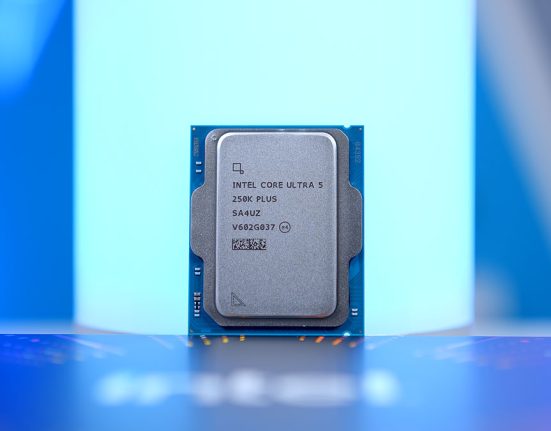
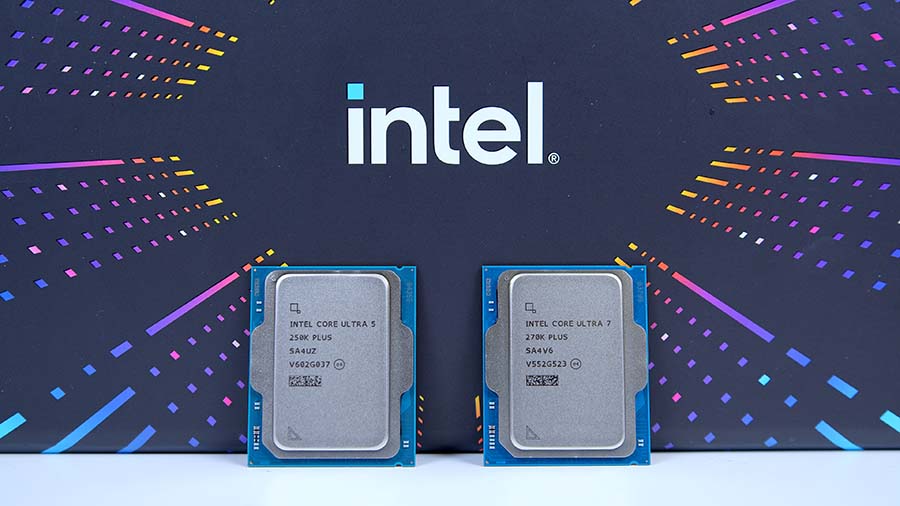
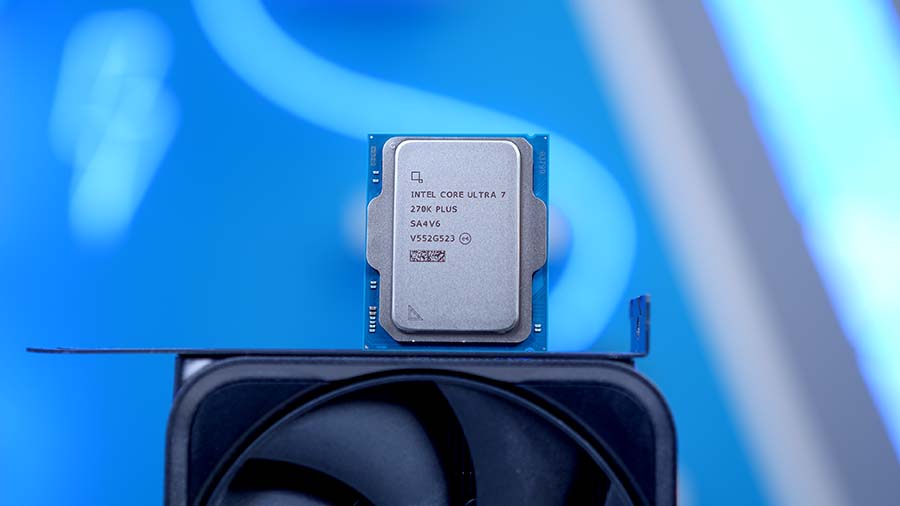
The Intel Core Ultra 7 270K Plus launches in tandem with the Core Ultra 5 250K in what looks set to be a resounding return to form for Intel. Built on the existing LGA 1851 socket, a platform which has its critics, and largely expected to be the send off party, the Core Ultra 7 270K Plus (and 250K Plus, for that matter) proves Intel aren’t out of the fight just yet. With this launch Intel finally have an answer to the dominant reign of the Ryzen 9000 series of processors. But is it enough to upset the applecart and shake up the status quo in what is a frankly unprecedented market situation? Well, I think so!
In this article, I’ll be focussing on the Core Ultra 7 270K Plus. For those of you interested in seeing what the Core Ultra 5 250K Plus has to offer, you can find my review of that CPU here.
CPU Comparison
Intel Core Ultra 200K+ Desktop CPU Comparison
Hover rows for highlight. Drag the :: handle to reorder columns, or tap/click a header title to sort.
| CPU | ::Cores | ::Threads | ::Base Clock | ::Max Boost | ::TDP | ::Total Cache | ::Where to Buy |
|---|---|---|---|---|---|---|---|

AMD Ryzen 5 9600X Budget-friendly Zen 5 competitor |
6 | 12 | 3.9 GHz | 5.4 GHz | 65W | 38MB | |
Intel Core Ultra 5 250K Plus Mid-range Arrow Lake+ desktop CPU (Q1 2026) |
18 | 18 | 4.2 GHz | 5.3 GHz | 125W | 60MB | Coming Soon |

AMD Ryzen 7 9700X 8-core Zen 5 gaming / productivity CPU |
8 | 16 | 3.8 GHz | 5.5 GHz | 65W | 40MB | |
Intel Core Ultra 7 270K Plus Step-up Arrow Lake+ desktop CPU |
24 | 24 | 3.9 GHz | 5.5 GHz | 125W | 79MB | Coming Soon |

AMD Ryzen 7 9800X3D High-FPS Zen 5 gaming CPU |
8 | 16 | 4.7 GHz | 5.2 GHz | 120W | 104MB |
Specifications
The Core Ultra 7 270K Plus follows much the same ideology as the Ultra 5 250K Plus when it comes to specs. Rather than chasing massive and likely unsustainable clock speed improvements, instead focusses on Core count and Caching capacity. Versus its predecessor, the Core Ultra 7 265K, L2 and L3 cache on the 270K Plus are up 4MB and 6MB respectively and Core count for Efficient-cores (E-cores) up at 16 from 12, bringing total core count on the 270K Plus to 24.
Interestingly, Performance-cores (P-cores) whilst keeping the total core count untouched, are down .2 GHz in the Base frequency department, with Boost Frequencies remaining untouched at 5.4GHz. E-cores receive a similar change, down .1GHz for Base and up .1GHz for Boost frequencies.
CPU Specifications
Architecture
Arrow Lake (TSMC N3B)
Socket
FCLGA1851
Cores / Threads
24 / 24 (8P + 16E)
Base / Boost Clock
3.9 GHz / Up to 5.5 GHz
L2 + L3 Cache
40MB + 36MB
TDP
125W (up to 159W Turbo)
Memory Support
DDR5 (up to 7200 MT/s)
PCIe Support
PCIe 5.0 & 4.0
Elsewhere, memory support receives a very health boost with support as standard for up to 7200 MT/s DDR5, up from the relatively low previous figure of 6400MT/s and chip Base and Turbo powers remain identical to the 265K at 125W and 250W a piece. The 270K Plus is also fully overclockable, and while it can offer significantly increased performance in certain scenarios, headroom is lacking versus the 250K Plus.
Architecture
The principal change from the original Arrow Lake CPUs to the Plus series is the addition of four more Efficient cores. Where the Arrow Lake CPUs lacked the additional oomph required at times, particularly in intensive scenarios, the Plus series is Intel's attempt to rectify these issues. The larger 30MB L3 cache, in particular is a standout in making the chips more rounded. Packing that extra power needed to make latency sensitive scenarios that be snappier.
Behind the curtain however, Intel have been tinkering further. The fruits of their labour? The Intel Binary Optimization Tool or IBOT. The general premise of IBOT is, as you may have guessed it, optimization. Designed to improve system efficiency, IBOT is said by Intel themselves, to be capable of extracting an additional 10-40% performance in certain scenarios, purely by restructuring and streamlining the game code.
In theory this all sounds great but at least for the time being will likely remain just that. With minimal support for gaming titles outside of a frankly tiny list of 12 single-player only titles and no support for CPUs outside the new PLUS range other than, mobile Panther Lake CPUs, mainstream consumers will likely never experience the benefits. Yet. Of course I'd expect this to change as support rolls out across titles but for now, with IBOT in its infancy, I doubt we'll truly feel the full effect of this new tech any time soon.
Thermals
Power, Thermals, and Efficiency
Peak CPU Power (Gaming)
159W
Average Gaming Power
120W
Peak Temperature
62°C
FPS per Watt
1.78
Performance
The bottom line? The Core Ultra 7 270K Plus delivers on its promise to increase performance, just not quite enough to for the PLUS range to topple the X3D chips in pure gaming performance just yet. That said, this release reflects a huge step in the right direction, and the Core Ultra 7 270K should absolutely be taken into consideration as a serious and, more importantly, viable option, moving forward.
Performance Snapshot
Multi-Game Average FPS
1080P
189.8FPS
1440P
201.8FPS
4K
201.4FPS
Map
Dam Battlegrounds
Capture Length
4-7 mins
Window Mode
Fullscreen
Resolution Scaling
TAAU, 100%, Manual
Frame Generation
Off
VSync / Reflex
VSync Off, NVIDIA Reflex On
Overall Quality
High
Graphics Breakdown
View Distance / AA / Shadows / Post / Texture / Effects / Reflections / Foliage / GI all High
1080P
184.0FPS
1440P
176.8FPS
4K
117.5FPS
Capture Length
4-7 mins
Display
Fullscreen, Aspect 16:9
AA / Upscaling
TAAU, Render Scale 100
Frame Gen / Latency
Frame Generation Off, Low Latency Off
VSync / FPS Cap
VSync Off, No Limit
Preset
Graphics Quality High
GI / Reflections
Lumen GI High Quality, SSR reflections
Detail Settings
Model / Post / Shadows / Texture / Effects / Foliage all High
1080P
178.9FPS
1440P
172.3FPS
4K
150.3FPS
Map / Mode
Empire State, Conquest
Capture Length
4-7 mins
Fullscreen Mode
Windowed (Fullscreen Device Monitor 1)
Resolution / Refresh
120Hz, Aspect Auto
VSync / FOV
VSync Off, FOV 90, Vehicle FOV 79
Preset
Custom, Graphics Quality High
Texture / Mesh / Terrain
All High
Reflections / AO & GI
Reflections High, SSR High, GTAO High
1080P
266.8FPS
1440P
166.9FPS
4K
116.6FPS
Mode / Map
Zombies Solo, Ashes of the Damned (Spawn Area)
Capture Length
4-7 mins
Display / Resolution
Fullscreen, Aspect Auto
Render Resolution
100%, Dynamic Resolution Off
VSync / Frame Cap
VSync Off (Gameplay + Menus), Unlimited FPS
Reflex / Frame Gen
NVIDIA Reflex On, DLSS FG Off, FSR FG Off
Preset
Custom (Eco preset Efficiency baseline)
Core Quality
Textures / Detail / Particles / Shaders / Shadows / Terrain / Volumetrics all High
1080P Comp
189.8FPS
1440P
201.8FPS
4K
125.6FPS
Window Mode
Fullscreen
Quality Preset
1080p Competitive: all Low + View Distance Far; 1440p/4K: High
Anti-Aliasing & Super Resolution
TAA
Temporal Super Resolution
Recommended
3D Resolution
100%, Dynamic Off
Nanite Virtualized Geometry
On
Global Illumination
Lumen High
NVIDIA Reflex Low Latency
On
The Core Ultra 7 270K Plus does a commendable job at taking the fight to the current AMD range of CPUs and in most cases, outperforms the Ryzen 7 9700X across the board in our benchmark suite. However, as you begin to factor in the X3D chips, the shortcomings of the 270K Plus become more apparent. Particularly at 1080p and 1440p, the drop off in performance leaves the 270K Plus with clear ground to make up versus the X3D chips, which across all three resolutions tested, offer much more consistent and stable performance.
From Our Full Test Suite
CPU Comparison Testing

At 4K however, the 270K Plus reels the X3D chips in considerably, and while it does ultimately lose out more often than not it doesn't go out without a fight. And for the first time in a long time the X3D chips no longer seem untouchable. Lets not forget too that these X3D chips are geared towards gaming, the 270 Plus is a much more rounded option, factor in those additional cores and the outlook for the 270K Plus becomes all the more positive.