
-
Cores
18
-
Threads
18
-
Boost Clock
5.3GHz
-
L3 Cache
30MB
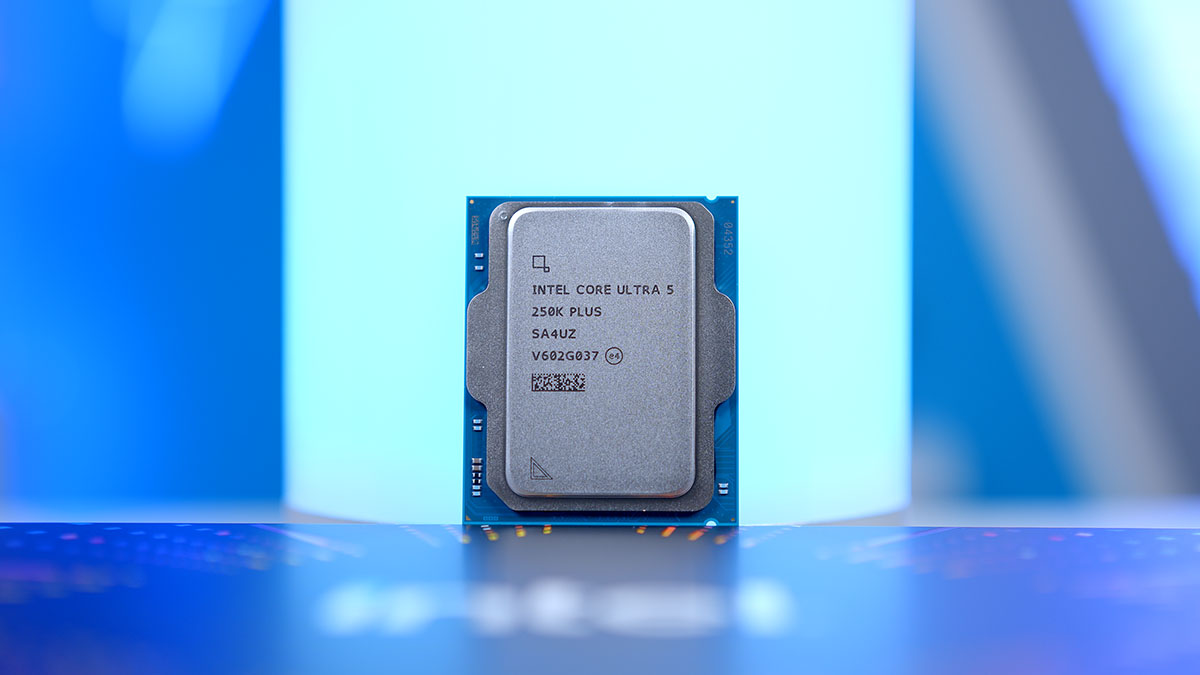
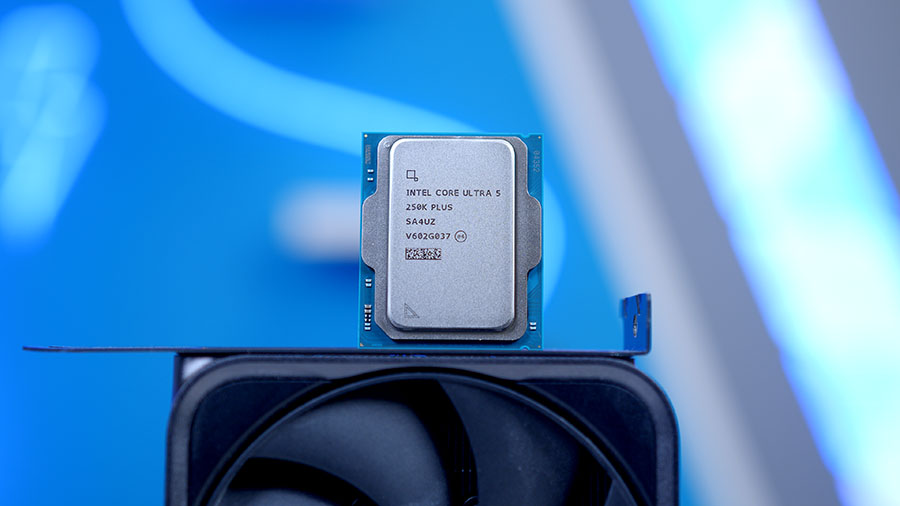
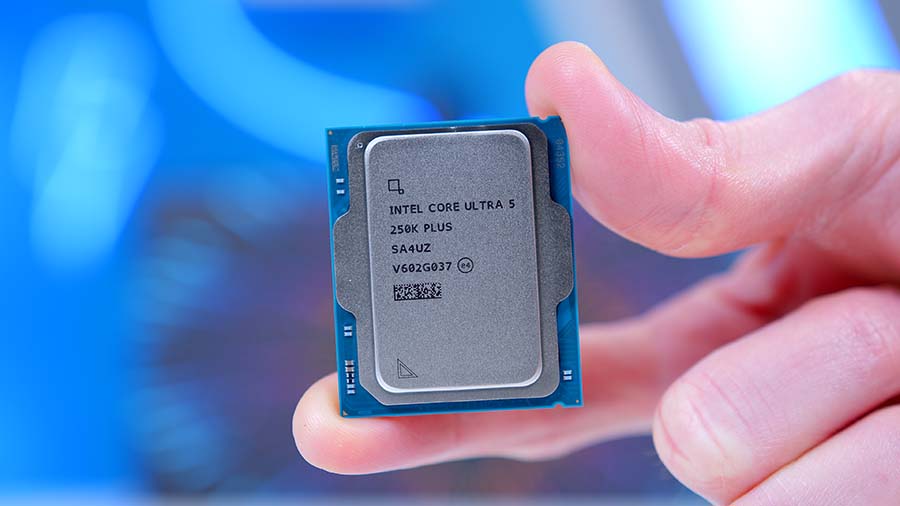
The Intel Core Ultra 5 250K Plus releases as part of a refresh to the current Intel Core Ultra line-up alongside the Core Ultra 7 270K Plus. Widely expected to be the final launch on the current LGA 1851 socket, do Intel finally have an answer the to ever-reliable Ryzen 9000 series? Well, early signs are indicating that Intel may have cracked the code, balancing the solid performance of the Raptor Lake processors with the thermal efficiency of the earlier Core Ultra releases. But is it enough? Intel will certainly be hoping so.
If the rumours are true and this is the final launch on this socket and taking the challenge to the matured Ryzen 9000 series with a chipset in its infancy is a huge ask. And, with AM5 here to stay until at least 2027, should this Core Ultra Plus release fail to compete, Intel risk not only losing out to Ryzen 9000 for a second time, but perhaps a third time too.
CPU Comparison
Intel Core Ultra 200K+ Desktop CPU Comparison
Hover rows for highlight. Drag the :: handle to reorder columns, or tap/click a header title to sort.
| CPU | ::Cores | ::Threads | ::Base Clock | ::Max Boost | ::TDP | ::Total Cache | ::Where to Buy |
|---|---|---|---|---|---|---|---|

AMD Ryzen 5 9600X Budget-friendly Zen 5 competitor |
6 | 12 | 3.9 GHz | 5.4 GHz | 65W | 38MB | |
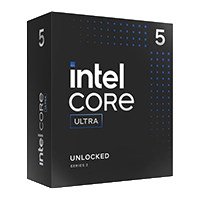
Intel Core Ultra 5 250K Plus Mid-range Arrow Lake+ desktop CPU (Q1 2026) |
18 | 18 | 4.2 GHz | 5.3 GHz | 125W | 60MB | Coming Soon |

AMD Ryzen 7 9700X 8-core Zen 5 gaming / productivity CPU |
8 | 16 | 3.8 GHz | 5.5 GHz | 65W | 40MB | |
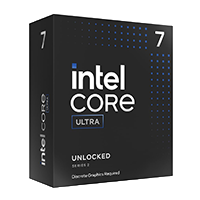
Intel Core Ultra 7 270K Plus Step-up Arrow Lake+ desktop CPU |
24 | 24 | 3.9 GHz | 5.5 GHz | 125W | 79MB | Coming Soon |
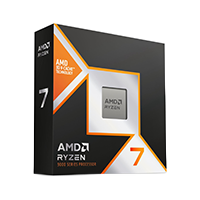
AMD Ryzen 7 9800X3D High-FPS Zen 5 gaming CPU |
8 | 16 | 4.7 GHz | 5.2 GHz | 120W | 104MB |
Specifications
The Core Ultra 5 250K Plus offers meaningful improvements versus the Core Ultra 5 245K. The big headline is a jump from 14 to 18 total cores, with a 12, 6 split between Efficiency and Performance cores. Efficiency-core (E-core) Base Frequency, however, is down versus the 245K but Cache and Total L2 Cache are both up, now sitting at 30 MB respectively. The Performance-core base clock also rises jumps up from 3.6GHz to 4.2GHz, and the Max Turbo and P-Core frequency also receives small bumps, but a bump nonetheless, up to 5.3GHz from 5.2GHz.
Memory support receives a very health boost with support as standard for up to 7200 MT/s DDR5, accounting for a much wider range of DDR5 memory. L2 cache and Total Cache both receive solid increases to 30MB up from 24 MB and 26 MB. Elsewhere Processor Base and Turbo power remain the same as the 245K, avoiding any need to upgrade either PSU or AIO should you already have the suitable hardware.
CPU Specifications
Architecture
Arrow Lake (TSMC N3B)
Socket
FCLGA1851
Cores / Threads
18 / 18 (6P + 12E)
Base / Boost Clock
4.2 GHz / Up to 5.3 GHz
L2 + L3 Cache
30MB + 30MB
TDP
125W (up to 159W Turbo)
Memory Support
DDR5 (up to 7200 MT/s)
PCIe Support
PCIe 5.0 & 4.0
The 250K Plus is fully overclockable, and while it does act in many ways as a sort of factory-tuned step-up from the 245K, those who want to take things further will find the headroom is there. How stable that overclock will be as clock speeds begin to push toward 5.5GHz and beyond, however, remains to be seen.
Architecture
The principal change from the original Arrow Lake 245K to the 250K Plus is the addition of four more Efficient cores. Where earlier critics pointed to the 245K's limited E-core count as a weakness in multi-threaded productivity work, Intel have addressed that directly here. The larger 30MB L3 cache, shared across all cores, also helps in latency-sensitive gaming workloads compared to the 245K's 24MB. On paper at least, it is a more balanced chip.
The Core Ultra 2 250K Plus does however, have another trick up its sleeve in the form of Binary Optimisation. Intel's Binary Optimisation Tool or IBOT sounds ambitious but in theory its general premise of workings is relatively simple. Optimise code to run more efficiently on Arrow Lake, yep - that's it. No additional input required, no-in game settings, no developer involvement needed, just a piece of local software sitting between the game code and the processor and internally rewriting instructions in real time.

The one caveat? Support for this is limited, very limited. Currently limited to single-player titles whilst an anti-cheat tie-in is developed and even then the list of supported single player titles is minimal. As support scales though, and scale it will, Intel could have a real a trick up their sleeve.
Thermals
Power, Thermals, and Efficiency
Peak CPU Power (Gaming)
116W
Average Gaming Power
98W
Peak Temperature
59°C
FPS per Watt
1.86
Performance
So how does the Core Ultra 5 250K Plus actually fit into the current CPU landscape? Well, the 250K Plus is a step forward from the 245K it replaces, and very competitive its Ryzen 9000 competitors, aggressively so. Ranging on average 5-10% faster than the 245K depending on the title, the improvement is fairly substantial for what is essentially a mid-cycle refresh. Compare it head to head versus its direct rival, the 9600X and the data makes for even more positive reading.
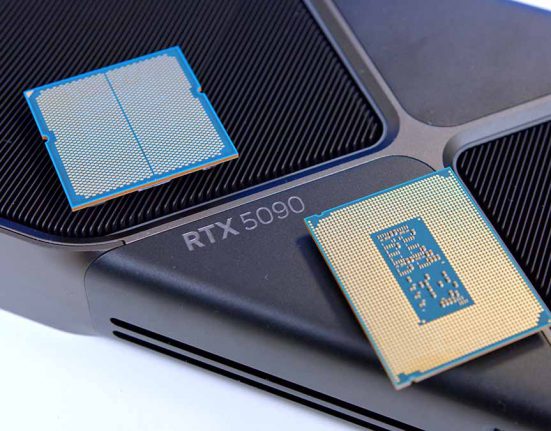
All testing carried out paired with an RTX 5090 Founders Edition and 32GB DDR5 6000 MT/s RAM.
Performance Snapshot
Multi-Game Average FPS
1080P
201.7FPS
1440P
207.0FPS
4K
187.8FPS
Map
Dam Battlegrounds
Capture Length
4-7 mins
Window Mode
Fullscreen
Resolution Scaling
TAAU, 100%, Manual
Frame Generation
Off
VSync / Reflex
VSync Off, NVIDIA Reflex On
Overall Quality
High
Graphics Breakdown
View Distance / AA / Shadows / Post / Texture / Effects / Reflections / Foliage / GI all High
1080P
188.3FPS
1440P
170.6FPS
4K
123.5FPS
Capture Length
4-7 mins
Display
Fullscreen, Aspect 16:9
AA / Upscaling
TAAU, Render Scale 100
Frame Gen / Latency
Frame Generation Off, Low Latency Off
VSync / FPS Cap
VSync Off, No Limit
Preset
Graphics Quality High
GI / Reflections
Lumen GI High Quality, SSR reflections
Detail Settings
Model / Post / Shadows / Texture / Effects / Foliage all High
1080P
177.5FPS
1440P
165.8FPS
4K
148.3FPS
Map / Mode
Empire State, Conquest
Capture Length
4-7 mins
Fullscreen Mode
Windowed (Fullscreen Device Monitor 1)
Resolution / Refresh
120Hz, Aspect Auto
VSync / FOV
VSync Off, FOV 90, Vehicle FOV 79
Preset
Custom, Graphics Quality High
Texture / Mesh / Terrain
All High
Reflections / AO & GI
Reflections High, SSR High, GTAO High
1080P
234.1FPS
1440P
204.0FPS
4K
147.9FPS
Mode / Map
Zombies Solo, Ashes of the Damned (Spawn Area)
Capture Length
4-7 mins
Display / Resolution
Fullscreen, Aspect Auto
Render Resolution
100%, Dynamic Resolution Off
VSync / Frame Cap
VSync Off (Gameplay + Menus), Unlimited FPS
Reflex / Frame Gen
NVIDIA Reflex On, DLSS FG Off, FSR FG Off
Preset
Custom (Eco preset Efficiency baseline)
Core Quality
Textures / Detail / Particles / Shaders / Shadows / Terrain / Volumetrics all High
1080P Comp
225.1FPS
1440P
158.0FPS
4K
116.1FPS
Window Mode
Fullscreen
Quality Preset
1080p Competitive: all Low + View Distance Far; 1440p/4K: High
Anti-Aliasing & Super Resolution
TAA
Temporal Super Resolution
Recommended
3D Resolution
100%, Dynamic Off
Nanite Virtualized Geometry
On
Global Illumination
Lumen High
NVIDIA Reflex Low Latency
On
Take COD Black Ops 7 Zombies as a highlight. The 250K Plus puts in 234.1 FPS at 1080p, placing it just behind the 9850X3D and 9800X3D but ahead of the bulk of the Intel line-up and comfortably above the 245K it replaces and more importantly puts clear daylight between itself and the 9600X across all three resolutions. Arc Raiders offers similarly positive reading, with the chip sitting consistently ahead of the 245K and again the 9600X across all three resolutions.
From Our Full Test Suite
CPU Comparison Testing

Fortnite is a closer run race, with the lead swapping between the 9600X and and 250K Plus across 1080p and 1440p, before ultimately landing in favour of the 250K Plus at 4K. Battlefield 6 and Marvel Rivals sit mid-pack better than the 245K, and roughly where I'd expect it to land.
Its worth noting that, on average across our test suite, the 250K Plus pulls significantly more power than the AMD Ryzen 7 9700X at comparable frame rates, which remains the most efficient option at this price tier.
Intel Core Ultra 5 250K Plus Review Verdict
So, the TLDR is that the 250K Plus is a healthy improvement over the 245K it replaces, and with Intel's new-found budget push, first seen on the recent ARC GPUs, makes the 250K Plus a compelling proposition versus the Ryzen 5 9600X. FINALLY! The Core Ultra 5 250K Plus has a legitimate claim to the budget crown and is perhaps the rightful owner to said crown. The problem? Longevity. With AM5 here to stay until 2027 and offering current generation upgrade paths a while longer. If the rumours are true and this is the final hurrah for LGA 1851, Intel's strongest current selling point, their value, goes right out the window
Overall Score
4.2 / 5
A strong all-rounder that finally puts Intel back in the budget conversation.
Features
4.2 / 5
Design
3.9 / 5
Performance
4.0 / 5
Value For Money
4.5 / 5
Pros
- Excellent value
- DDR5-7200 memory support
- PCIe 5.0 future-proofing
Cons
- No Hyper-Threading on P-cores
- Socket longevity concerns
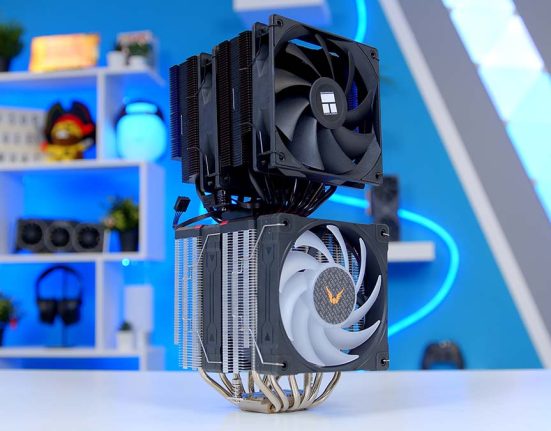
- 159W peak draw needs a quality cooler