
Two years ago, HAVN turned up as a brand new name with the HS 420 and gave the case market a good shake. Panoramic glass, a graphics card sat front and centre, room for 140mm fans just about everywhere… and a weight north of 17kg before you’d fitted a single part. We adored it. The catch? It’s a big old thing, and not every desk has room for one.
Enter the HS 360. HAVN says this one was shaped by feedback from partners and reviewers, and it shows. Same Hybrid Structure idea, smaller and lighter shell, plus two things the big one never had: back-connect board support and room for SFX power supplies. Shrinking a case normally costs you something, and I went in expecting a fair few compromises. I found some. Just nowhere near as many as I’d braced for.
Specifications
On paper, then. The HS 360 is a dual-chamber mid-tower with room for Mini-ITX, Micro-ATX and ATX boards, including back-connect ATX boards that move their power and data headers onto the rear of the motherboard. E-ATX support hasn’t made the trip over from the HS 420, so if you’re running an extended board, the bigger case is still your home.
Case Specifications
- Model HAVN HS 360
- Form Factor Mid-Tower (dual-chamber)
- Motherboard Support Mini-ITX, Micro-ATX, ATX (incl. back-connect ATX)
- Case Dimensions (L x W x H) 490.9mm x 242.1mm x 520.9mm
- Front IO 1 x USB 3.2 Gen 2 Type-C, 2 x USB 3.2 Gen 1 Type-A, 1 x Audio jack
- PCI-E Slots 7 x Horizontal
- Colour Black, White
-
Max Clearance
GPU length: Up to 453mmCPU cooler: Up to 175mmPSU length: Up to 230mm
- Drive Support 3 x storage bays, each 1 x 3.5-inch or 2 x 2.5-inch
-
Fan Support
Top: Up to 3 x 120mmSide: Up to 3 x 120mmBottom: Up to 3 x 120mmRear: Up to 2 x 120mm (max 30mm thick)
-
Radiator Support
Top: Up to 360mmSide: Up to 360mmBottom: Up to 360mm
- Fan Hub 8-port PWM repeater (SATA powered)
Cooling is where it punches well above its size. All the fan mounts are 120mm, but three of the four mounting zones will swallow a triple-fan radiator, which is a lot of cooling hardware for something this compact. Power supply support has grown as well, with SFX and SFX-L (small form factor) units now joining standard ATX. Handy if you’ve already got one from a compact build, and something the HS 420 never offered.
As for the shrink itself, HAVN claims the HS 360 is 19.4% smaller than the HS 420. I ran both spec sheets through the calculator, and the overall volume comes out bang on that figure. Weight drops from 17.84kg to 14.05kg as well, which your lower back will thank you for, even if it’s still no featherweight.
HS 360 vs HS 420: What’s Changed?
If you already know the HS 420, here’s the short version of what’s different, because this is more than a shrink-and-call-it-a-day job.
First, the losses. Fan and radiator support steps down from 140mm and 420mm to 120mm and 360mm across the board, E-ATX is gone, and storage drops from five drive bays to three. Graphics card clearance falls back from the HS 420’s 480mm, though there’s still a generous amount of room for long flagship cards.
Now the gains. Back-connect ATX support is new, SFX units are now supported, and you get an extra expansion slot over the HS 420. The built-in fan hub has been reworked too, going from two six-port hubs to a single eight-port one with a higher per-hub current limit. HAVN also says the frame carries roughly 36% more structural strength than its predecessor, and that the glass bend is 31.8% tighter, which brings us neatly onto the design.
Design
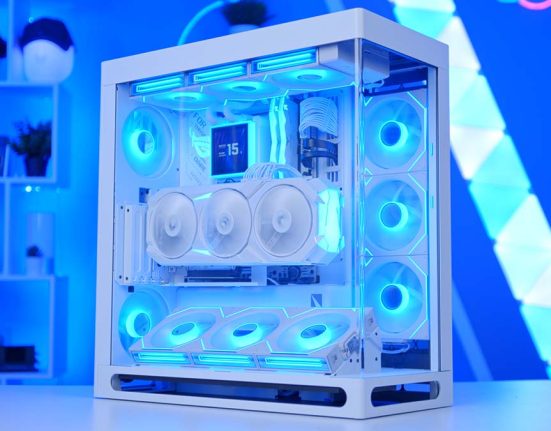
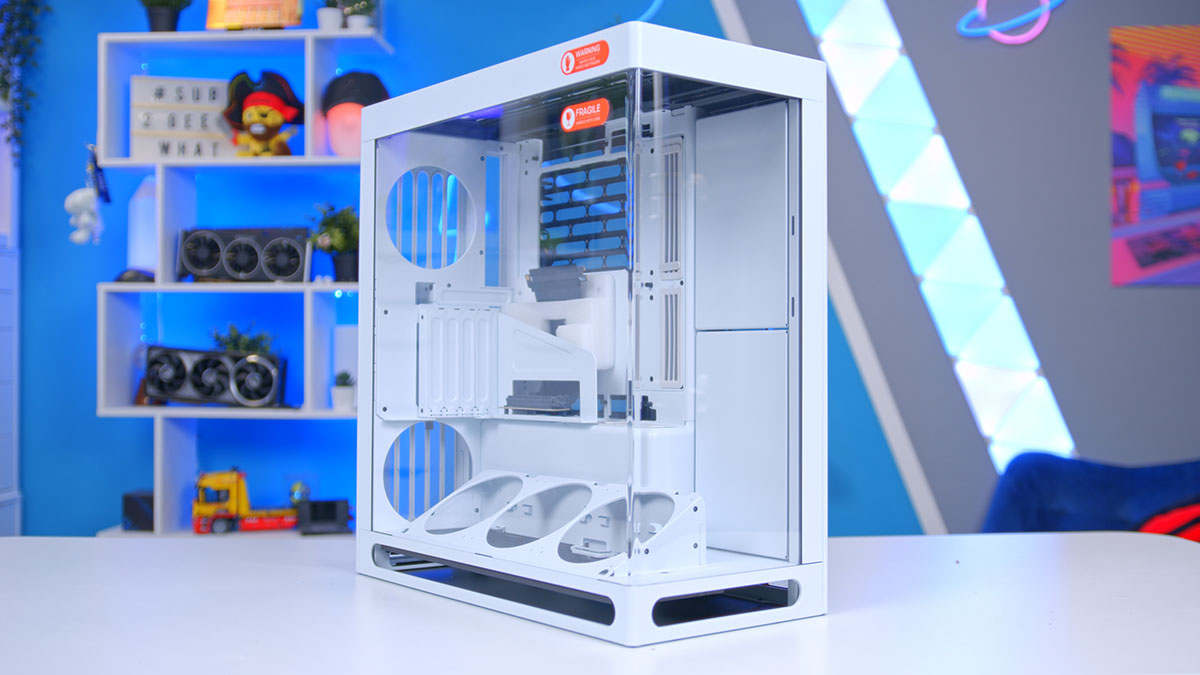
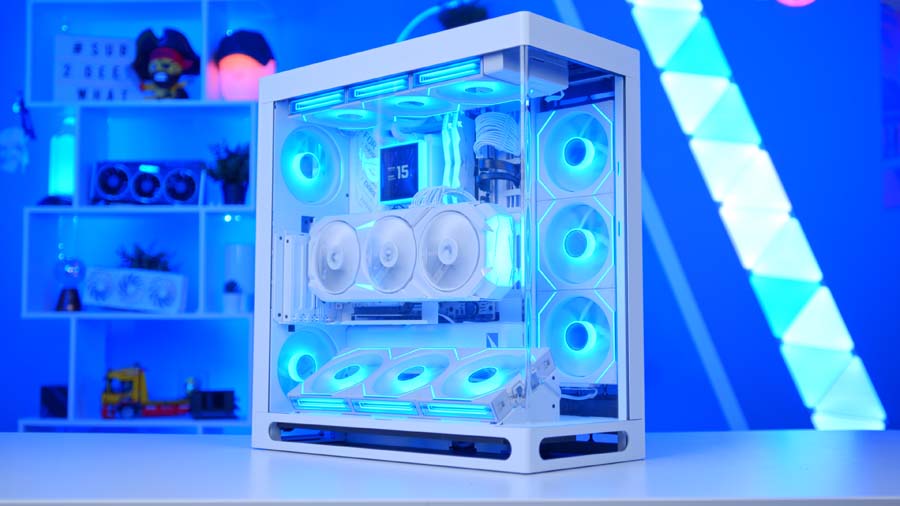
Right, the bit you’re here for. The HS 360 is unmistakably a HAVN. A single heat-formed sheet of tempered glass, which HAVN calls UniSheet, covers both the front and the side, and the bend where those two faces meet has been pulled in to an R7.5mm radius. HAVN says that’s one of the tightest bends it’s managed, with the aim of cutting the distortion you’d normally see through curved glass. On a showcase case, where the whole point is looking in, that detail matters.
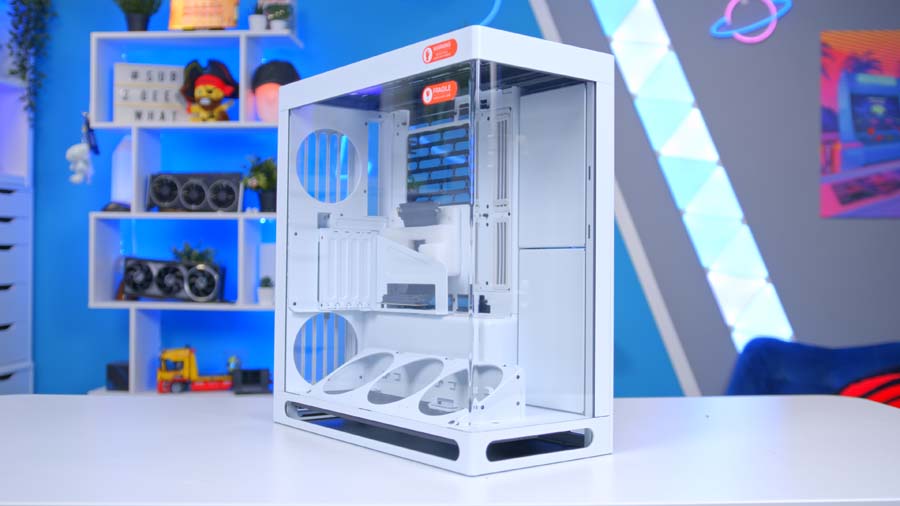
Inside, the layout follows the HS 420’s Hybrid Structure. The graphics card sits in the middle of the case in full view, and HAVN designs the dual-chamber structure to direct cool air from the bottom intake straight onto it. Over the back, the cable management tray carries the fan hub and a drive bay, keeping the clutter hidden away.
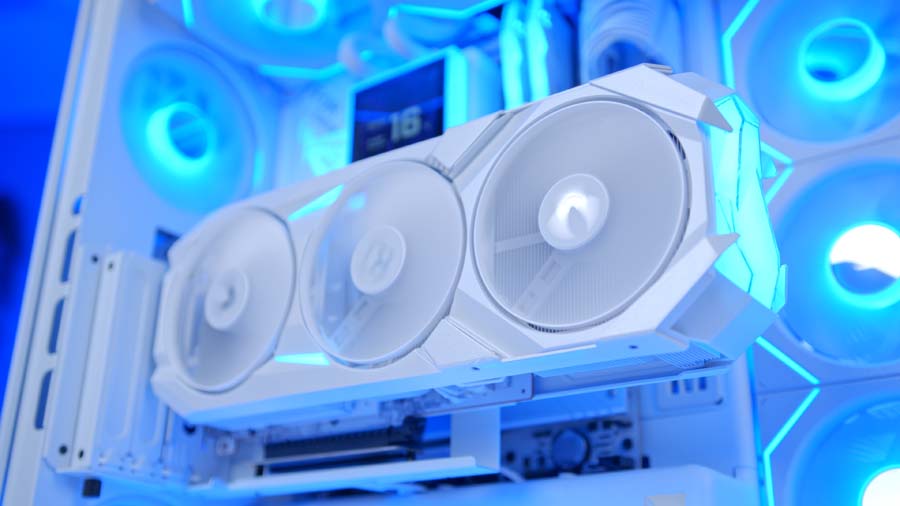
Graphics card support gets a refresh with a three-way adjustable bracket that HAVN says now handles single-slot cards as well as the chunky stuff. On the front right pillar there’s a VESA (Video Electronics Standards Association) mount for an internal display, ready for one of those little sensor screens that seem to be in every show build at the moment. Dust filtration covers four sides, with removable filters at the bottom and rear bottom, plus built-in ones at the top and side.
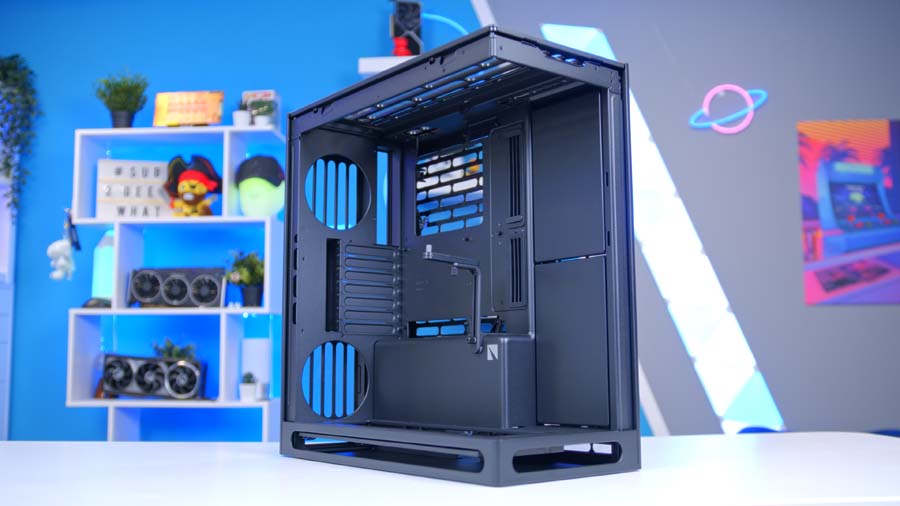
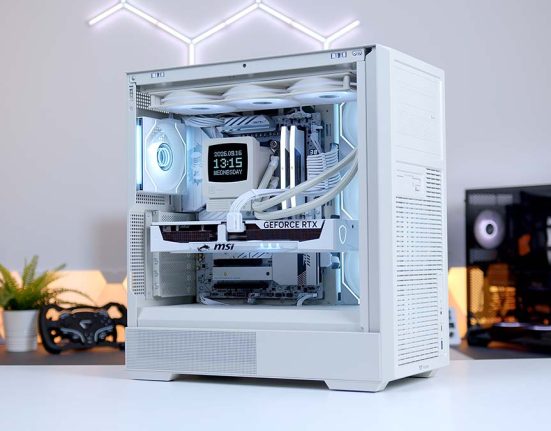
It comes in black or white, and the frame is galvanised steel, with zinc alloy, nylon and plastics used elsewhere and a handful of neodymium magnets in the mix. Nothing about it reads like a budget offshoot of a flagship. If anything, it looks like the case HAVN wanted to make all along.
Features We Like
Back-Connect Support, Finally
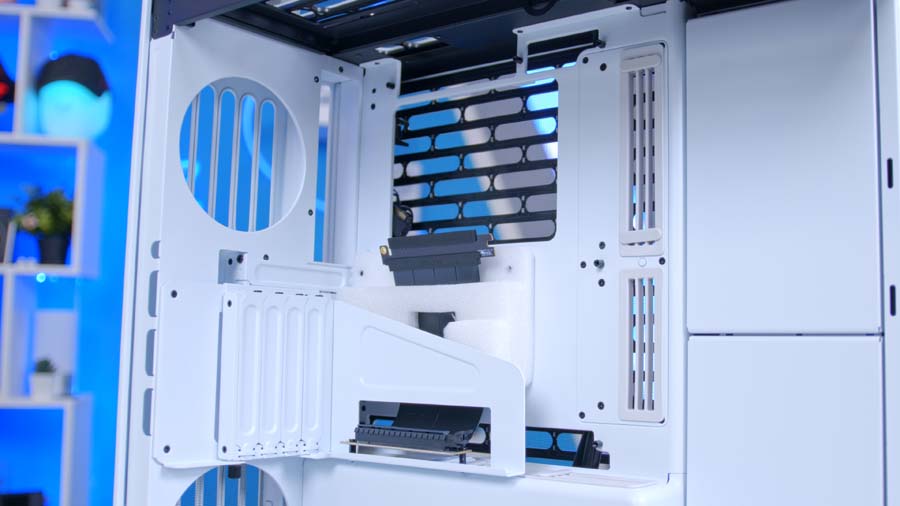
This was the HS 420’s one obvious gap, and HAVN has filled it. Back-connect motherboards move the main power, fan and USB headers to the back of the board, so most of your cables plug in out of sight. Pair that with panoramic glass and the front view is almost nothing but components, which is exactly what a case like this is for.
ASUS, MSI and Gigabyte all sell back-connect boards now, and the HS 360 means you no longer have to pick between one of those and HAVN’s look. Big fan of that.
Big Cooling in a Smaller Shell
A smaller case usually means fewer radiator options. Not here. Top, side and bottom can each host a full-length radiator, so you could run an all-in-one (AIO) cooler up top and still have two more mounts free for a custom loop or extra intake fans.
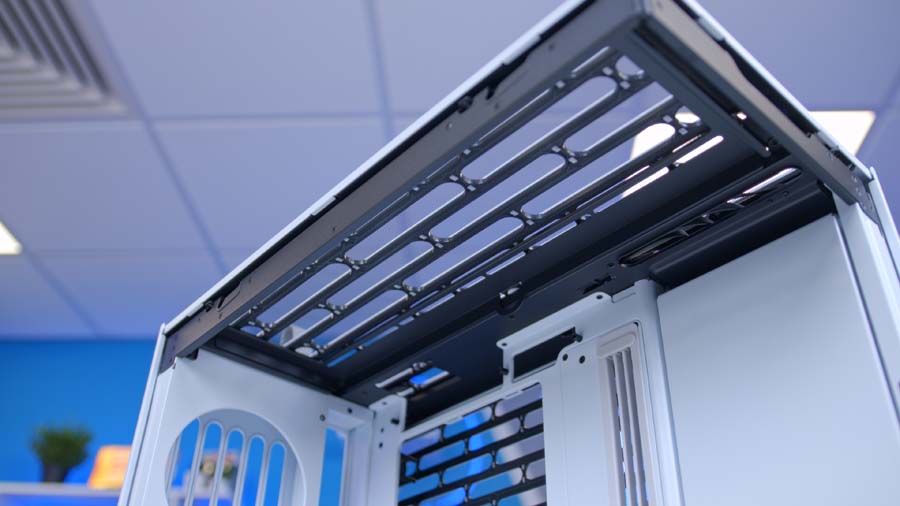
Do check the fine print, mind. HAVN quotes a 60mm limit on side radiator thickness with graphics cards over 312mm long, and with an AIO on top, memory height is capped at 46mm. Most kits will clear that comfortably, but a few of the taller RGB sticks won’t.
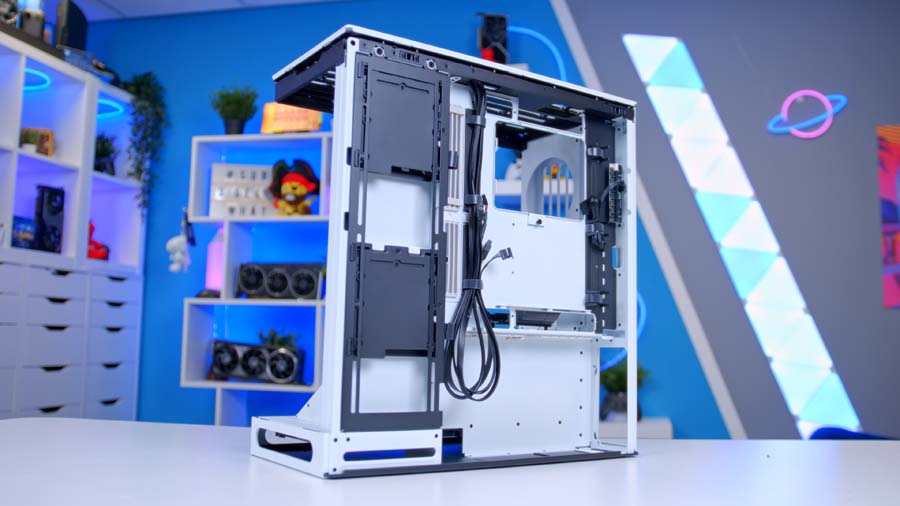
Fan wiring runs through a built-in PWM (pulse-width modulation) hub on the cable management tray. Your primary fan goes in the white port and the rest follow its signal, with the whole lot fed from a single SATA connector and a 3.3A budget shared between them. HAVN has also reworked the fan mounts so fans go in without fighting the components around them. If you’ve ever wrestled a top fan in over a tall memory kit, you’ll appreciate that one.
Features We Don’t Like
120mm Fans Only
This isn’t really something I don’t like, rather, something to consider. Forgive me, I’m clutching at straws!
The HS 420 took 140mm fans in every position. The HS 360 doesn’t take them anywhere. It’s 120mm or nothing. Larger fans can shift the same air at lower speeds, so losing them does narrow your options for a near-silent build.
To be fair, it’s the obvious trade for a smaller frame, and 120mm fans are hardly short on choice. It’s just a shame to lose one of the HS 420’s best traits.
Less Room for the Extras
Beyond the fans, a few other bits have been trimmed. E-ATX boards are out, storage drops to three drive bays, and air cooler clearance is lower than on the HS 420. HAVN itself recommends liquid cooling for this case, and with a layout this radiator-friendly, I’d agree.
None of that will trouble a typical gaming build. If you’re a data hoarder or you’ve got a workstation board, though, the HS 420 remains the better fit.
Conclusion
In HAVN’s own line-up, the HS 360 slots in beneath the HS 420 on both size and price. It’s aimed squarely at people who loved the look of the bigger case but couldn’t make it fit, whether that’s on a desk or in a budget. HAVN pitches it at system integrators as well, and a smaller, lighter panoramic case is an easier sell for prebuilt machines that need shipping.
Choosing between the two comes down to hardware. After 140mm fans, 420mm radiators or an E-ATX board? Get the HS 420. Building around a back-connect motherboard, an SFX power supply or simply a smaller desk? The HS 360 is the one I’d pick, and it’s the more modern case of the pair. And if panoramic glass isn’t your thing at all, HAVN’s BF 360 Flow covers the airflow-first crowd.
Either way, this is HAVN taking its best idea and making it fit more setups, without sanding off what made it special. Smaller case, same wow factor.