
![FI_[DM85] O11D Evo RGB White + 5080](https://geekawhat.com/wp-content/uploads/2025/12/FI_DM85-O11D-Evo-RGB-White-5080.jpg)
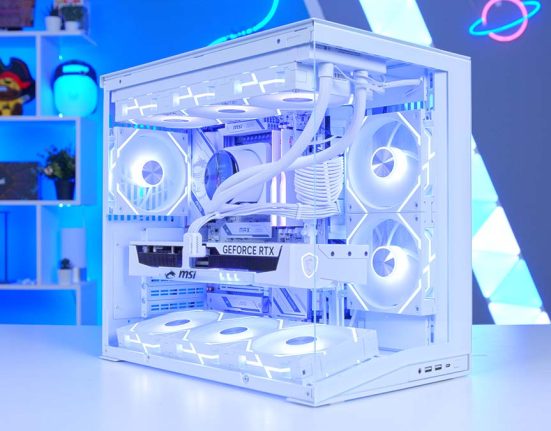
Building a clean, visually open system is always a satisfying challenge, and this time we’re taking it to the extreme with the Lian Li O11 Dynamic EVO RGB in white to attempt to build our most transparent gaming build yet.
This chassis is practically designed to showcase hardware, and we’re leaning into that with an all‑white component ensemble. An AMD Ryzen 7 9800X3D and NVIDIA RTX 5080 make for a harmonic duo. Together, they give this system the muscle to push smooth, consistent 4K performance in modern AAA titles while still looking effortlessly composed behind glass.
Every part of the component list has been chosen with both form and function in mind, from the HydroShift II LCD‑S 360N cooler to the compact but powerful RTX 5080 AERO OC SFF. The result is a build that doesn’t just aim for strong numbers; it aims for a cohesive, transparent aesthetic that makes the hardware itself the visual centrepiece.
Parts Overview
AMD Ryzen 7 9800X3D
Skip to Section
A top-end gaming CPU with 8 cores, 16 threads, and second-gen 3D V-Cache, built to deliver consistently high frame rates for demanding 4K-ready systems.
Lian Li HydroShift II LCD-S 360N
Skip to Section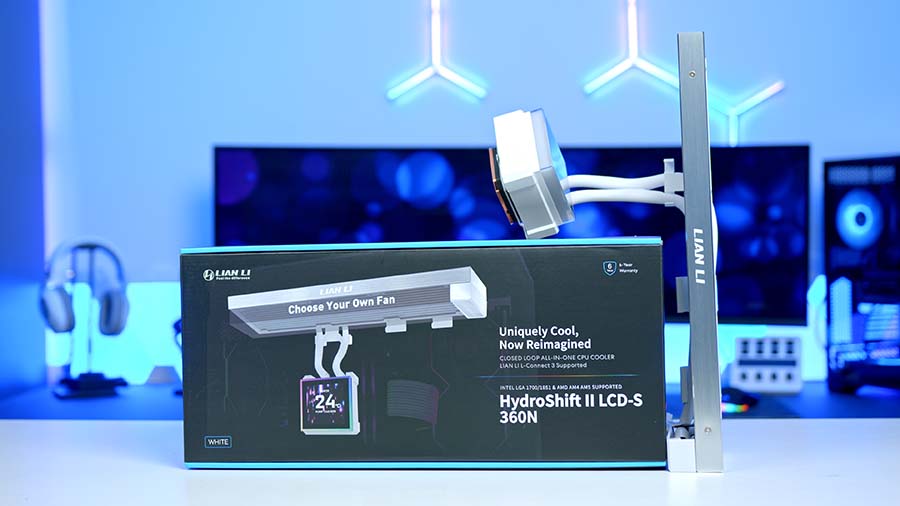
A 360mm AIO built for clean visual integration, with a square LCD block and RGB trim that fits this transparent white aesthetic perfectly.
Gigabyte B850 AORUS ELITE WIFI7 ICE
Skip to Section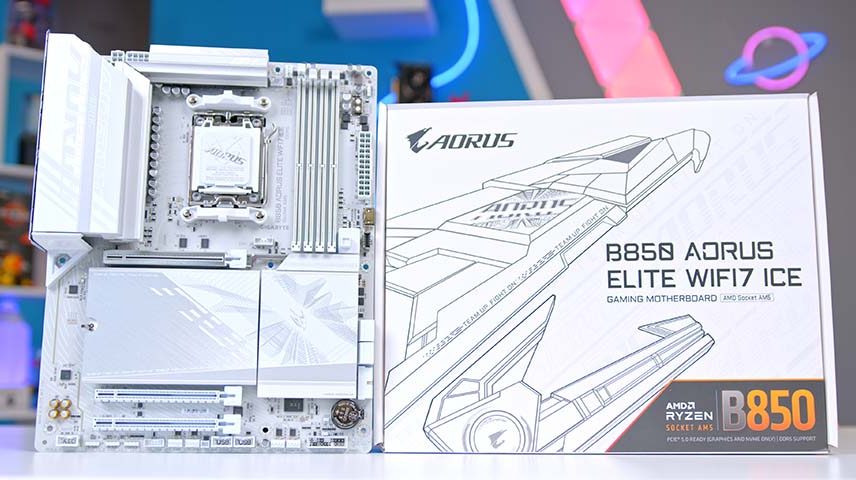
A strong value AM5 board with a 14+2+2 VRM design, PCIe Gen5 support, WiFi 7, and an all-white finish that matches this build.
Corsair Vengeance RGB DDR5
Skip to Section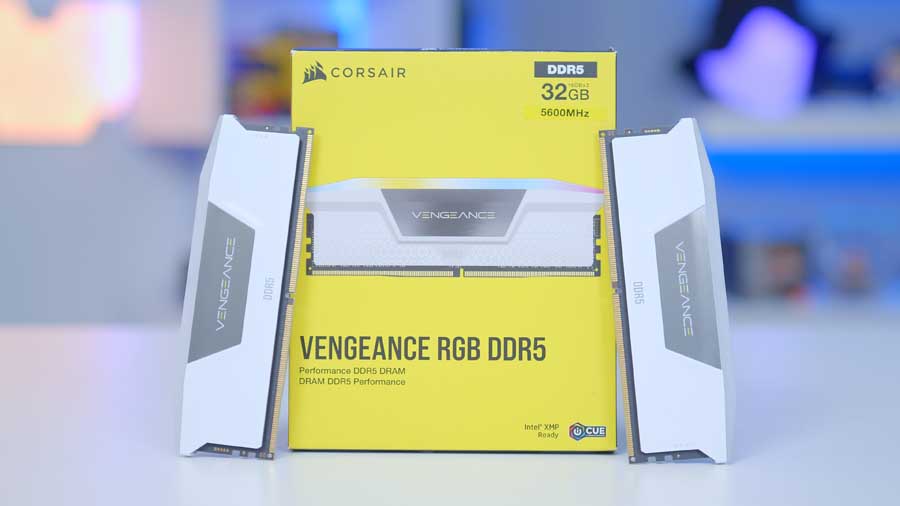
A 32GB DDR5 kit is a sweet spot for gaming, content work, and future-proofing. It offers strong baseline capacity while leaving headroom for heavier multitasking and newer game engines.
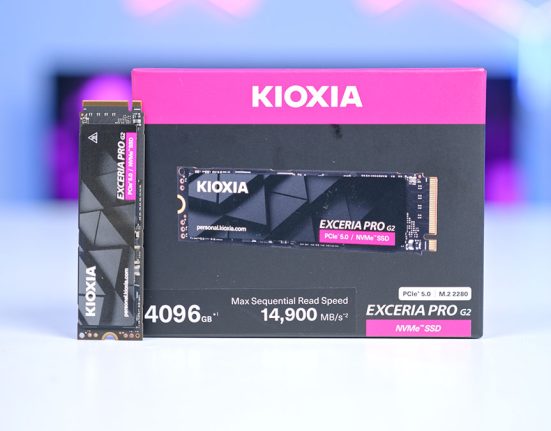
KIOXIA EXCERIA PLUS G4
Skip to Section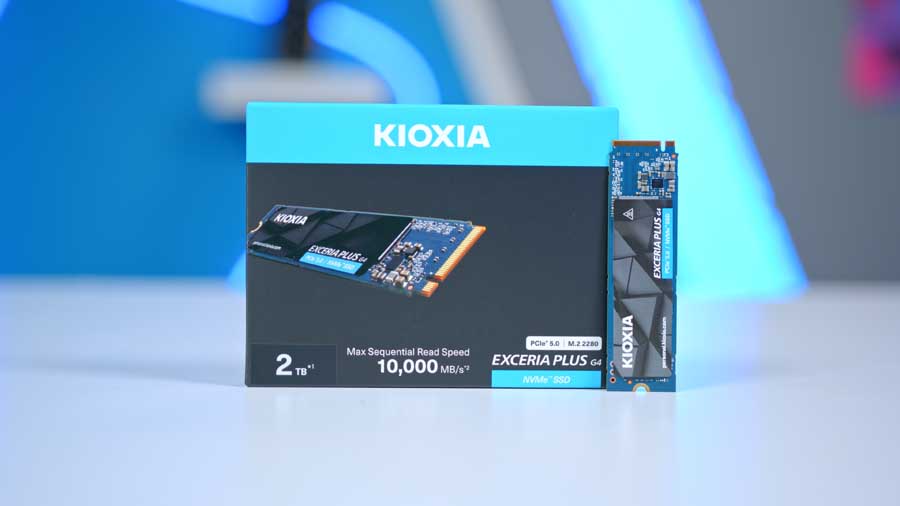
A PCIe 5.0 NVMe SSD tuned for fast game load times and heavy workloads, with strong 2TB-class throughput for a premium gaming system.
GIGABYTE GeForce RTX 5080 AERO OC SFF
Skip to Section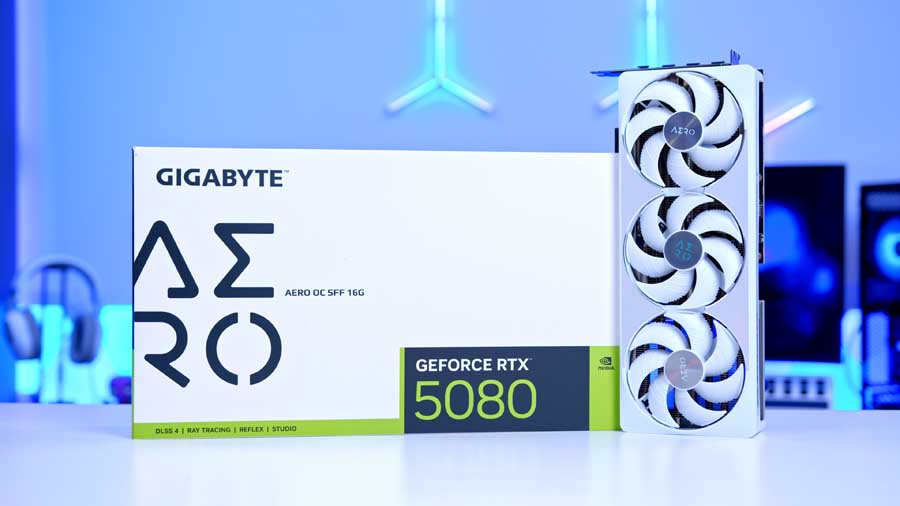
A compact high-end RTX 5080 designed for premium 4K performance while matching this white-focused build aesthetic.
Lian Li O11D EVO RGB
Skip to Section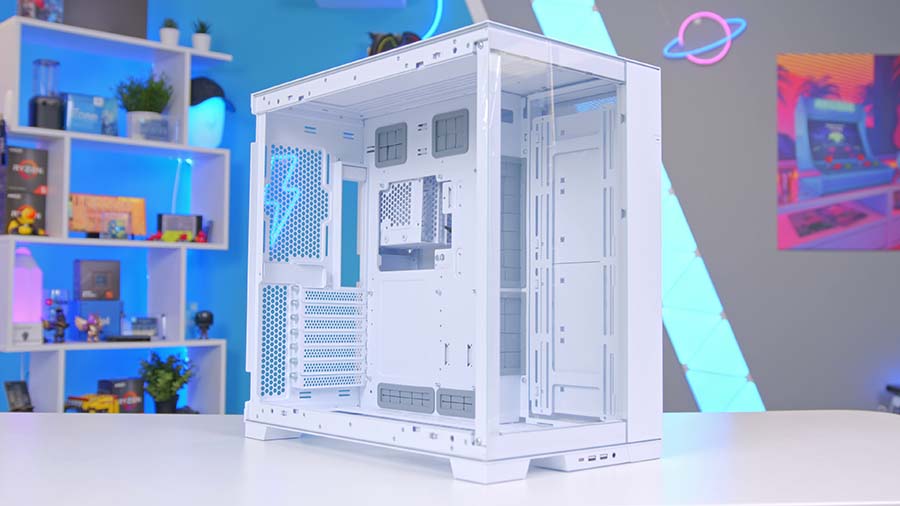
A showcase-ready fishtank chassis with strong modularity, spacious internals, and premium RGB accents to highlight an all-white component stack.
Corsair RM850e
Skip to Section
A fully modular ATX 3.1 power supply with the right wattage and modern connector support for a high-end RTX 5080 gaming build.
AMD Ryzen 7 9800X3D
Kicking things off with the AMD Ryzen 7 9800X3D, it has 8 cores and 16 threads, it runs single-thread tasks outstandingly, and even provides more than enough power to execute the demanding multithreaded computations found in today’s most advanced games. This CPU has a base clock speed of 4.7GHz and, with overclocking, can reach up to 5.2GHz. This is further backed up by its 2nd-gen AMD 3D V-Cache technology, which increases cache to reduce the time taken to fetch data and instructions. These are some stellar specs that make this CPU an absolute no-brainer choice for top-end gaming.
If you’re looking for a more affordable alternative to the 9800X3D or for a processor with even better performance, the table below shows how the Ryzen 7 9800X3D compares to the rest of the latest X3D chips:
CPU Comparison
AMD Ryzen X3D Desktop CPU Comparison
Hover rows for highlight. Drag :: to reorder columns, or tap/click a header title to sort.
| CPU | ::Cores | ::Threads | ::Base Clock | ::Max Boost | ::TDP | ::Total Cache | ::Where to Buy |
|---|---|---|---|---|---|---|---|
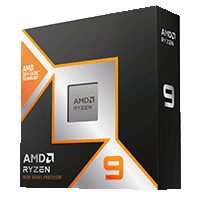
AMD Ryzen 9 9950X3D Zen 5 flagship X3D desktop CPU |
16 | 32 | 4.3 GHz | 5.7 GHz | 170W | 144MB | |
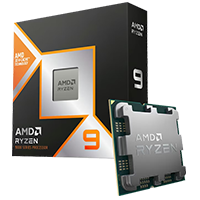
AMD Ryzen 9 9900X3D 12-core Zen 5 X3D for mixed gaming and production |
12 | 24 | 4.4 GHz | 5.5 GHz | 120W | 140MB | |
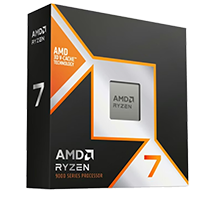
AMD Ryzen 7 9850X3D Newest Ryzen 7 X3D in the lineup |
8 | 16 | 4.7 GHz | 5.6 GHz | 120W | 104MB | |

AMD Ryzen 7 9800X3D High-FPS Zen 5 gaming CPU |
8 | 16 | 4.7 GHz | 5.2 GHz | 120W | 104MB | |
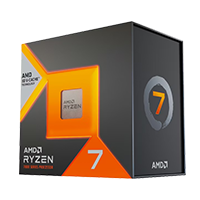
AMD Ryzen 7 7800X3D Mainstream Zen 4 gaming favorite |
8 | 16 | 4.2 GHz | 5.0 GHz | 120W | 104MB |
Lian Li HydroShift II LCD-S 360N
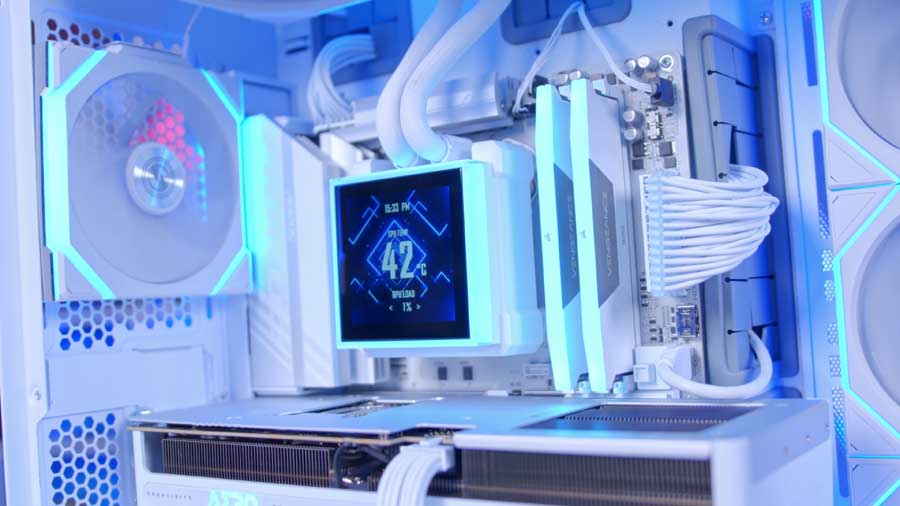
Lian Li’s HydroShift II LCD‑S 360N is essentially an SKU refresh, but it lands in a sweet spot for builds that prioritise clean integration and visual cohesion. We opted for this cooler because it fits our case layout without compromise, and because we liked the previous generation. The new lineup splits into two variants, the HydroShift II LCD‑S and the HydroShift II LCD‑C, both built around the same cooling hardware but differentiated by their display design and aesthetic language.
The LCD‑S model uses a sharp, square LCD panel framed by an RGB trim that gives it a more modern, angular presence inside the case. The LCD‑C takes the opposite approach with a curved, circular display that softens the look while still offering the same RGB accenting. Functionally, they are interchangeable, so the choice comes down to which shape better complements the rest of your components. The HydroShift II LCD series as a whole is designed to slot neatly into contemporary builds, offering a familiar installation experience with a more refined visual finish.
Gigabyte B850 AORUS ELITE WIFI7 ICE
The motherboard is a component that we can spend a little less on in an attempt to trim down the overall cost of the build. The B850 AORUS Elite WiFi7 ICE is a good match for the AMD Ryzen 7 9800X3D as it offers some overclocking tweaks for this processor, thanks to its 14 + 2 + 2 VRM design. The board also provides overclocking support for RAM via AMD EXPO, and it can accommodate up to 256GB of RAM overall.
Motherboard Specifications
-
Model
Gigabyte B850 AORUS ELITE WIFI7 ICE
-
Form Factor
ATX
-
Supported Memory
Up to 256GB DDR5, up to 8200MT/s (OC)
-
VRM Power Phases
14 + 2 + 2
-
PCI-E x16 Slots
1 x PCI-E 5.0
-
PCI-E x4 / M.2 Slots
1 x PCI-E 5.0
2 x PCI-E 4.0 -
M.2 Storage
Up to 3 x M.2 drives (top slot Gen5)
-
Front I/O
4 x USB 2.0
2 x USB 3.2 Gen1 Type-A
1 x USB 3.2 Gen2x2 Type-C -
Rear I/O
4 x USB 2.0
2 x USB 3.2 Gen2 Type-A
5 x USB 3.2 Gen1 Type-A
1 x USB 3.2 Gen2 Type-C -
Audio
1 x Optical S/PDIF
2 x Audio Jacks -
Networking
2.5 Gigabit LAN
WiFi 7 -
Best Fit
High-end AM5 gaming builds with DDR5 and Gen5 storage support
Gigabyte's B850 AORUS ELITE WIFI7 ICE leverages excellent features, including a high-speed rear IO. This board has twelve ports, with only four being USB 2.0. There’s also space for up to three M.2 drives, with the top slot Gen5.
For networking, the board offers both 2.5Gb Ethernet and WiFi 7, giving you flexible, high‑bandwidth options whether you prefer wired stability or cutting‑edge wireless performance. This makes the board well‑suited for gaming, streaming, and large file transfers. Finally, it has an all-white PCB and white heatsinks, which complement the build's aesthetics, which is why the B850 AORUS ELITE WiFi7 earns its place.
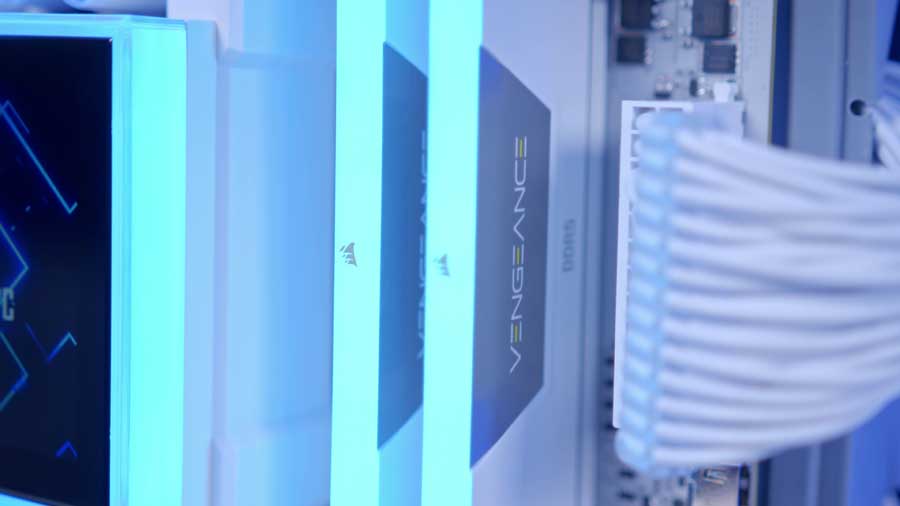
Corsair Vengeance RGB DDR5
For RAM, we’ve gone with the Corsair Vengeance RGB DDR5 32GB (2 x 16GB) kit. We opted for this kit because we felt that it would fit the look we were aiming for with this build. Under normal circumstances, we’d point people toward a white 32GB kit running around 6000MT/s, which tends to be the sweet spot for a modern gaming PC. But with the current RAM‑ageddon, the market is thin, prices are all over the place, and availability is anyone’s guess. At this point, it’s less about chasing the ideal spec sheet and more about grabbing something reliable that complements your build and doesn’t require a small miracle to find in stock.
KIOXIA EXCERIA PLUS G4
The KIOXIA EXCERIA PLUS G4 is a high‑performance NVMe SSD designed for gamers, creators, and power users. Built on the PCIe 5.0 and NVMe 2.0c interfaces, it delivers blazing‑fast sequential read speeds up to 10,000 MB/s and write speeds up to 8,200 MB/s in the 2TB capacity. It also features 218‑layer TLC NAND, a Phison E31T controller, and a pseudo‑SLC cache for accelerated burst writes.
We always recommend opting for at least 2TB for a gaming PC, as you’ll likely want to download many games, and modern titles are increasingly heavy on storage. Leaving yourself enough headroom helps avoid the constant shuffle of uninstalling older games to make space for new ones, and it gives the drive more room to maintain peak performance over time.
GIGABYTE GeForce RTX 5080 AERO OC SFF
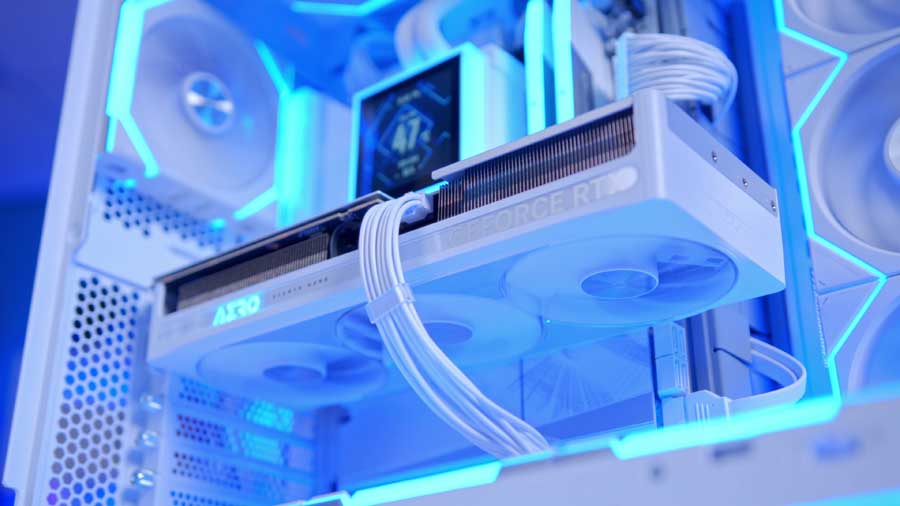
The GIGABYTE RTX 5080 AERO OC SFF is a compact, high‑end graphics card designed to match the performance ceiling of our CPU choice. It’s a striking white GPU with silver and cyan detailing, and its smaller form factor makes it ideal for builds where space and aesthetics both matter. Despite the GPU's reduced footprint, it delivers serious power thanks to NVIDIA’s Blackwell architecture, DLSS4, and 16GB of GDDR7 on a 256‑bit interface. In practice, it’s more than capable of pushing high frame rates at 4K in modern AAA titles, making it a balanced pairing for this system, especially when paired with the AMD Ryzen 7 9800X3D.
Lian Li O11D EVO RGB
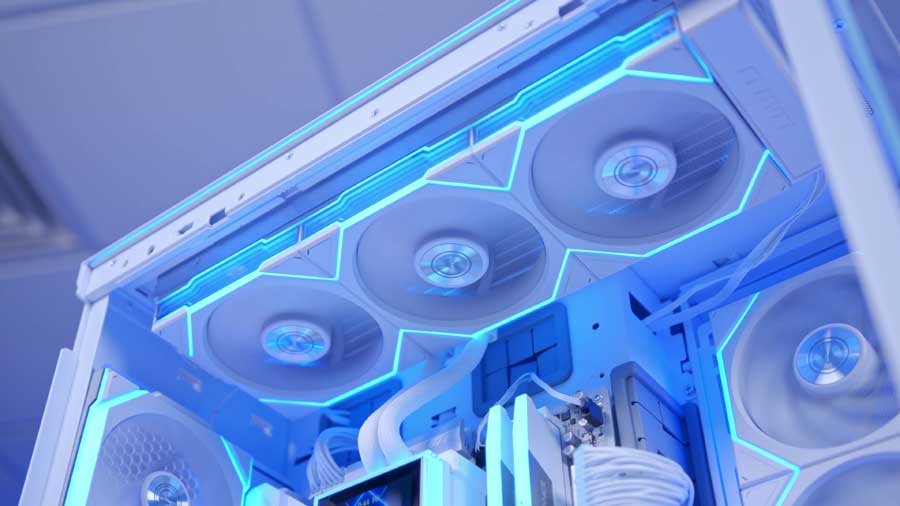
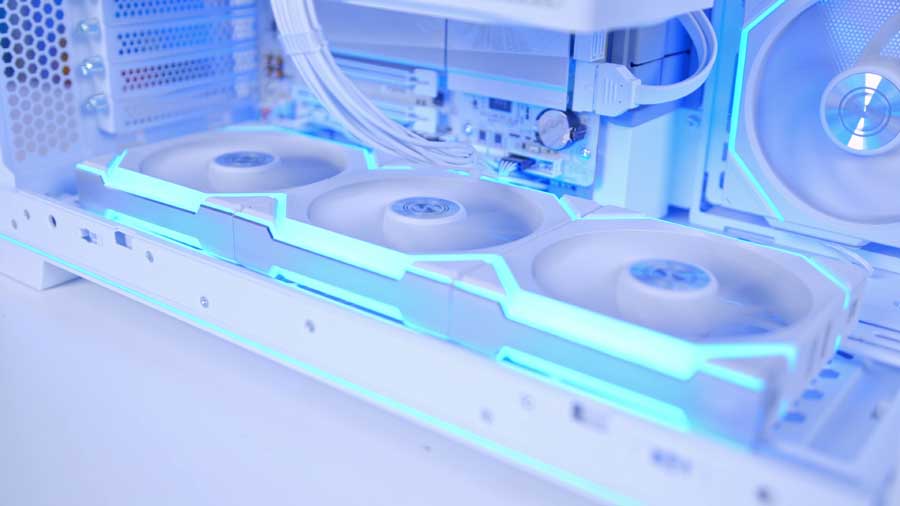
The Lian Li O11D EVO RGB is seen as the original fishtank case, and it is the component that gives our build its clarity. Lian Li’s O11 Dynamic EVO RGB case is the ultimate ‘Do It Yourself’ case, where PC fanatics can tailor their chassis to their own desire thanks to its modular design and flexible configuration. It has a strong front IO located at the very bottom of the front panel, with two USB 3.0 Type‑A ports, one USB 3.2 Gen2 Type‑C port, and a combo audio jack, giving you easy access to fast connectivity.
Case Specifications
-
Model
Lian Li O11D EVO RGB
-
Form Factor
Mid-Tower
-
Motherboard Support
E-ATX (under 280mm width), ATX, mATX, Mini-ITX
-
Case Dimensions (L x W x H)
478mm x 290mm x 471mm
-
Front IO
2 x USB 3.0 Type-A1 x USB 3.1 Type-CAudio jack -
PCI-E Slots
7 x Horizontal
-
Colour
Black | White
-
Max Clearance
167mm Cooler Height455.7mm GPU Length220mm PSU Length -
Drive Support
Up to 2 x 2.5 inchUp to 2 x 3.5 inch -
Fan Support
Front:No supportTop:Up to 3 x 140mmBottom:Up to 3 x 140mmSide:Up to 3 x 140mmRear:1 x 120mm -
Radiator Support
Front:No supportTop:Up to 360mmBottom:Up to 360mmSide:Up to 360mmRear:No support -
Pre-Installed Fans
0 (user-supplied)
The case measures 478 × 290 × 471mm, offering plenty of room for the latest graphics cards and other large components and clean cable routing. The chassis can house up to 10 fans, but it doesn’t come with pre-installed fans, so you will need to source some yourself. You also get to tailor your setup however you like. There are also 1.5mm thick L‑shaped ARGB strips along the top and bottom that support 14 lighting modes, adjustable brightness and colour, and full motherboard sync.
Corsair RM850e
This PSU belongs to Corsair’s RMe series, which comprises fully modular, low-noise power supplies certified to ATX 3.1 and compliant with PCIe 5.0. We’ve chosen the 850W version to ensure we have enough wattage to power the GPU. Our RTX 5080 has a recommended wattage of 850W, making this a perfect choice for this system.
Whilst matching the recommended specs exactly doesn't leave you much headroom for future upgrades, we are trying to spend within our means for this build. If you wish to opt for a higher wattage to take this into account, the 1000W variant of this power supply is a great forward-thinking alternative.
Suggested Article: Best Power Supplies to Buy in 2026
Gallery
Performance
Recommended Peripherals
A sleek low-profile keyboard option that blends compact sizing, comfortable switches, and a premium finish for mixed work and gaming use.
Esports-focused wireless mouse with strong sensor consistency and responsive click feel for FPS-heavy playstyles.
The VIRTUOSO MAX WIRELESS adds active noise cancellation, simultaneous 2.4GHz + Bluetooth, and 50mm graphene drivers for a more premium all-round experience.
Top-end 32-inch 4K gaming display with OLED-level response times and excellent HDR impact.