

![FI_[DP055] SAMA V60 + 9070 Build](https://geekawhat.com/wp-content/uploads/2025/12/FI_DP055-SAMA-V60-9070.jpg)
Over recent months, the concept of affordability in the components market has become a pipe dream. It feels almost laborious to search for the best prices, particularly as memory-oriented components have become heavily inflated. In this article, we’ll guide you through the components we’ve used to build a strong, budget-friendly gaming rig capable of delivering smooth 1440p and 4K gameplay across various titles.
By pairing AMD’s Ryzen 5 9600X with the Radeon RX 9070 XT, we have created one of the most balanced midrange builds for late 2025. This combination delivers consistently high frame rates at 1440p, while offering enough headroom to dip into smooth 4K gameplay for the next couple of years. While heavy multitasking might prove a little difficult with this system, we’ve factored in plenty of areas where you can upgrade parts in the future.
Components
CPU: AMD Ryzen 5 9600X
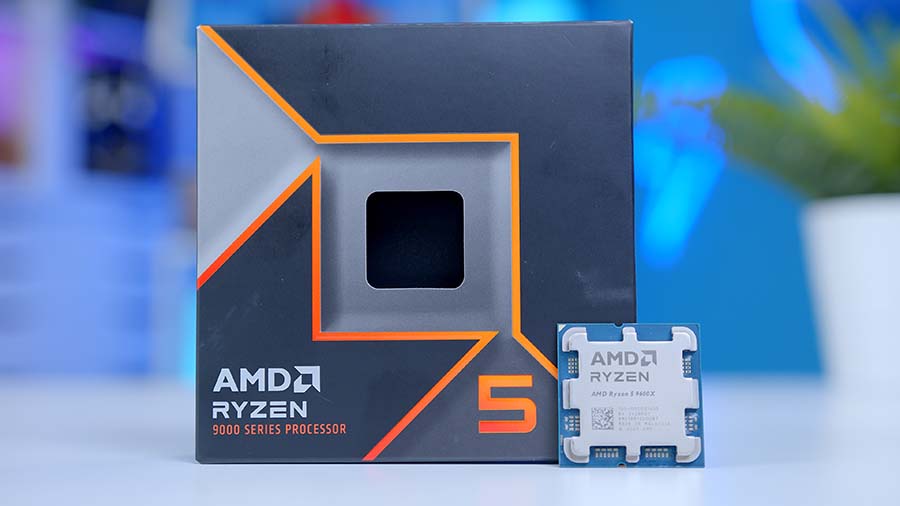
For the CPU in this build, we recommend AMD’s Ryzen 5 9600X chip – with 6 cores, 12 threads, and strong clock speeds that easily surpass 5GHz, it’s a well-rounded, high-performing option. The Ryzen 5 9600X has the edge in single-core applications and games due to its exceptional boost clock speed and low power budget. Because it consumes little power, it can sustain its 5.4GHz boost speed in modern games, making it an excellent pickup for 4K or 1440p with the right graphics card.
While the Ryzen 5 9600X offers excellent performance and efficiency, it’s worth noting that it is one of the more affordable options. Crucially, it also lives on the AMD AM5 socket, which does a considerable amount for ensuring good upgrade paths, and keeps motherboard costs down with a huge range of options to choose from.
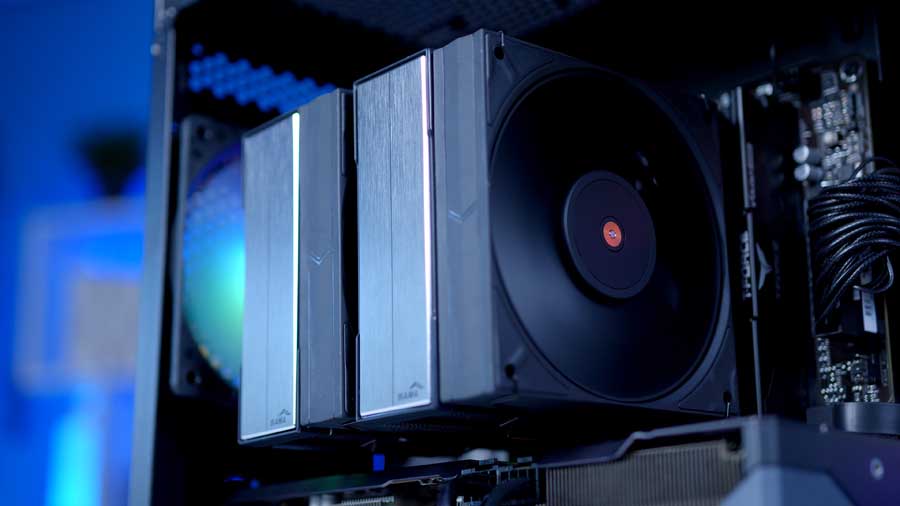
CPU Cooler: SAMA A60
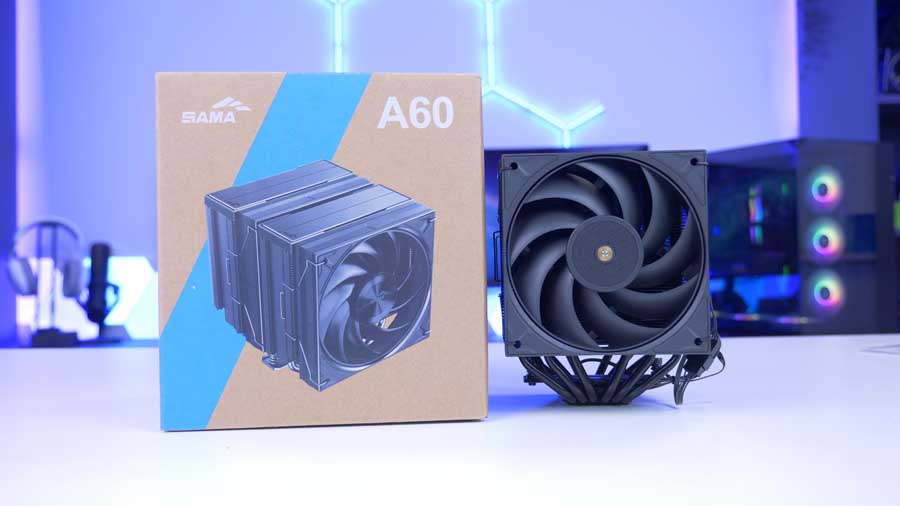
The SAMA A60 is a well‑matched air cooler for this CPU, delivering reliable mid‑range performance in our benchmarks. When tested against the Intel Core i7‑14700K (a notoriously hot processor under load), the A60 maintained impressively stable temperatures, giving us confidence in its efficiency across a wide range of CPUs. It operates whisper‑quiet and is available in several aesthetic variants, including an RGB‑lit option for those who want a touch of flair. For a mid‑range gaming build, this cooler strikes the right balance between affordability and thermal performance, while remaining understated yet cohesive in branding. It avoids unnecessary excess while still ensuring cool, consistent operation of the AMD Ryzen 5 9600X.
Motherboard: Gigabyte B850 EAGLE WIFI6E

The B850 Eagle WiFi 6E has quickly become a go‑to choice in our builds, thanks to its strong feature set and competitive price point. It covers all the essentials without overspending, offering next‑gen PCIe 5.0 support for both GPUs and M.2 storage to keep your system future‑proof.
| Specification | Gigabyte B850 EAGLE WIFI6E |
| Form Factor | ATX |
| Supported Memory | 4 x DDR5 DIMMs, up to 256GB up to 8200 MT/s (OC) |
| PCI-E x16 Slots | 1 × PCIe 5.0 3 × PCIe 3.0 (x1 from chipset) |
| PCI-E x4 Slots | 1 × PCIe 5.0 M.2 2 × PCIe 4.0 M.2 |
| VRM Power Phases | 8+2+2 |
| Front IO Headers | 1 × USB 3.2 Gen 1 Type-C Header (5Gbps) 1 × USB 3.2 Gen 1 Type-A Header 2 × USB 2.0 |
| Rear IO | 2 × USB 3.2 Gen 2 Type-A (10Gbps) 1 × USB 3.2 Gen 1 Type-C (5Gbps) 2 × USB 3.2 Gen 1 Type-A (5Gbps) 4 × USB 2.0 Type‑A 1 x PS/2 keyboard/mouse port |
| Audio | 3 × Audio Jacks Optical S/PDIF Out |
| Networking | 1 Gigabit LAN WiFi 6E |
While its two‑tone design isn’t the flashiest, the clean, minimal aesthetic makes it versatile enough to slot into a wide range of setups. With a healthy mix of USB ports across both front and rear I/O, including fast USB 3.2 Gen 2 options, it ensures plenty of flexibility for peripherals and external devices. Lastly, it is backed by a solid 8+2+2 VRM design, WiFi 6E, and 1 Gigabit LAN. This ATX board delivers reliable performance and connectivity for any mid‑range gaming PC!
RAM: TEAMGROUP T-Force Vulcan DDR5
We consistently recommend a 32GB memory kit operating at a minimum of 6000 MT/s for optimal performance. The utility of 16GB of RAM is rapidly diminishing, as 32GB is quickly becoming recognised not just as the standard, but the bare minimum.

Furthermore, this RAM choice offers a relatively low-profile design, ensuring it fits effortlessly onto your motherboard without conflicts with the CPU cooler, an essential consideration for dual-tower air cooling units like the SAMA A60. The absence of visible RGB lighting is a double benefit: it aids clearance, and it reduces the overall cost without sacrificing speed or efficiency, especially given the current market climate for RAM as of December 2025.
SSD: TEAMGROUP MP44L
The TeamGroup MP44L is a PCIe Gen 4 SSD designed to deliver more than twice the performance of the Gen 3 interface, making everyday workloads significantly more efficient. In our Geekawhat benchmarks, it achieved sequential read speeds of 5,152 MB/s and write speeds of 4,450 MB/s, confirming that its real-world performance matches the marketing claims. For gaming, OS boot, and general productivity, these speeds translate into fast load times, smooth file transfers, and an overall snappy system response, which is precisely what you want from a modern SSD.
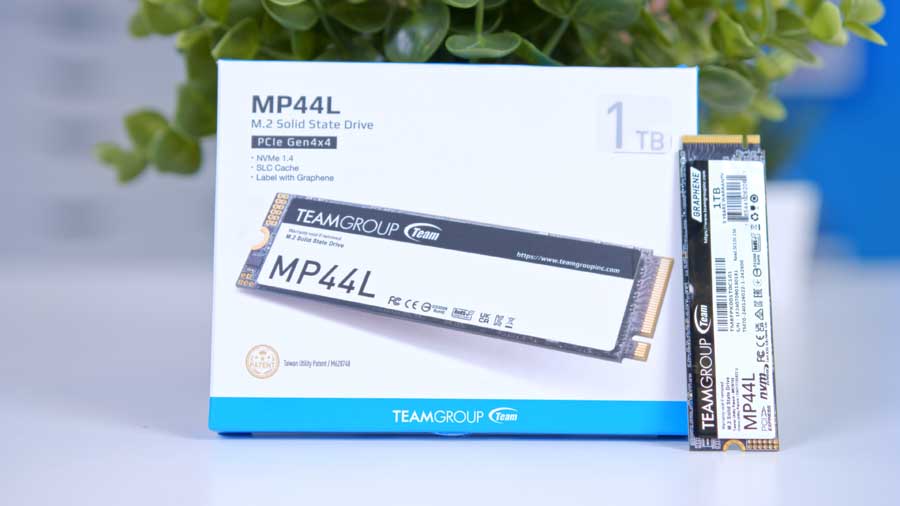
What makes the MP44L particularly appealing is its balance of high-end performance and affordability, freeing up budget for a stronger GPU and CPU pairing. And because it’s Gen 4, you’ll also have a clear upgrade path when Gen 5 drives become more accessible in price, ensuring your build stays future-ready without overspending today.
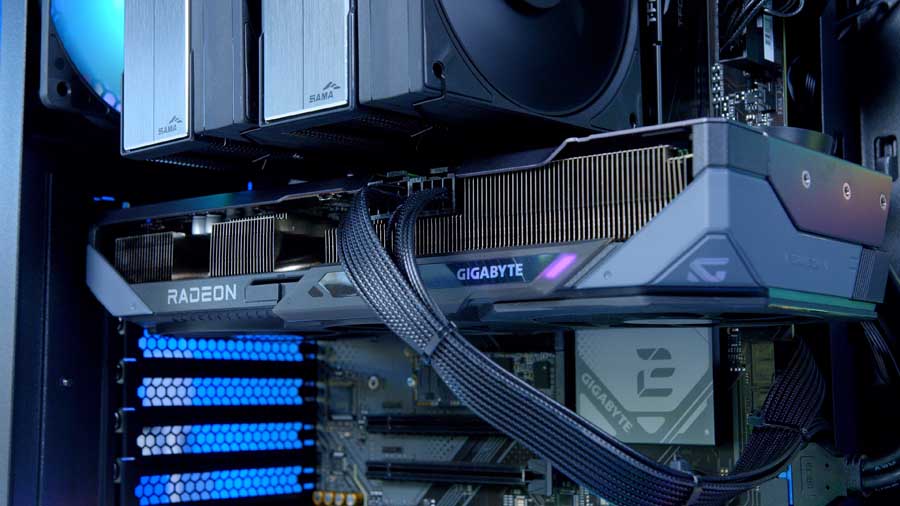
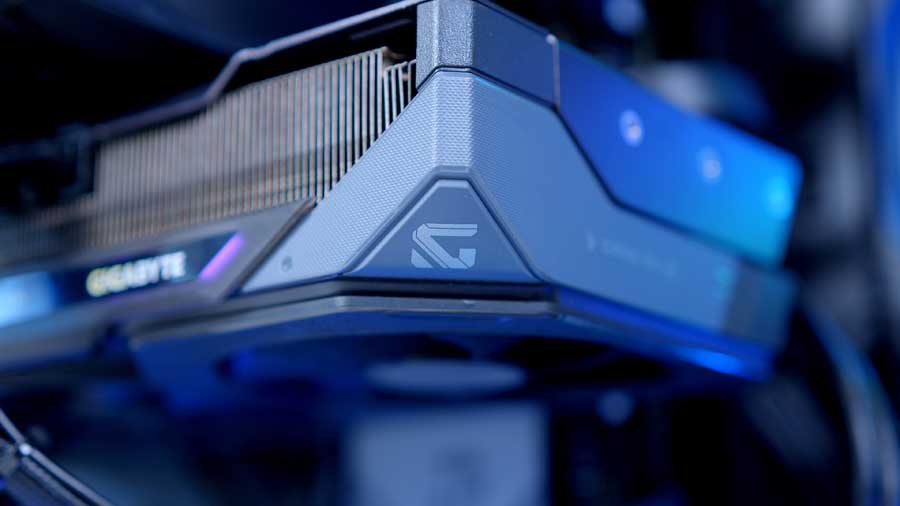
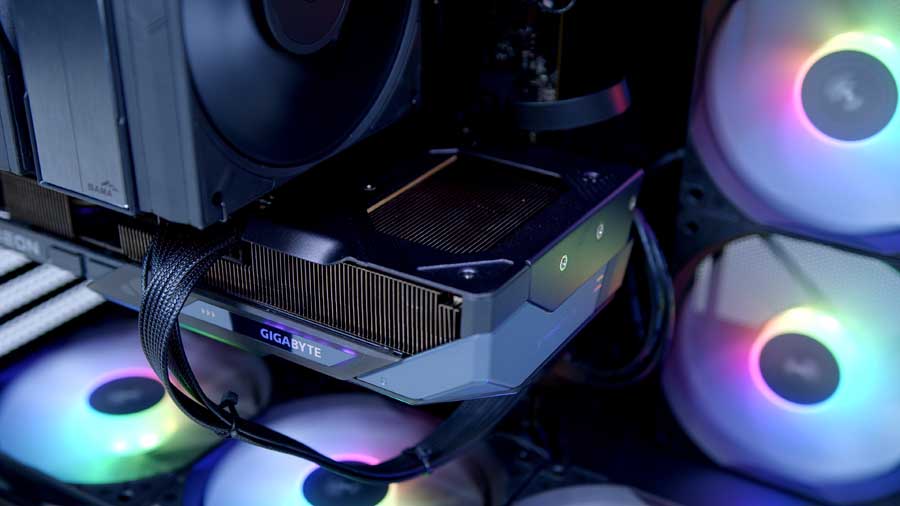
GPU: Gigabyte Radeon RX 9070 GAMING OC 16G
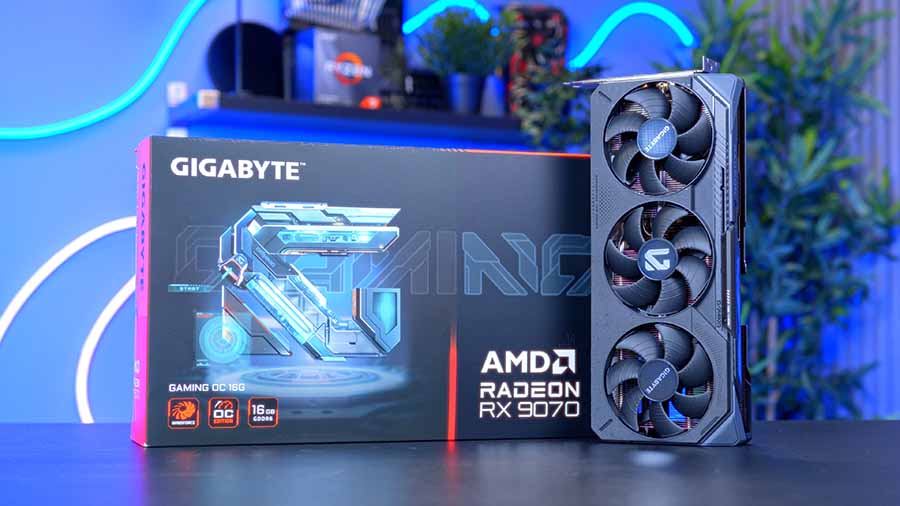
This is one of the best graphics cards for 1440p gaming in 2025, and when paired with our robust AMD Ryzen 5 9600X, it delivers high frame rates at 1440p, with some headroom for smooth 4K gameplay over the next couple of years. Despite relying on its previous-gen GDDR6 bandwidth, it employs 16GB of VRAM, hitting the absolute sweet spot for 1440p. Whilst you could opt for the RX 9070 non-XT, the RX 9070 XT edges out the non-XT version with higher boost clocks and better cooling, resulting in greater performance and longer lifespan. For gamers willing to spend a little extra, the RX 9070 XT offers better longevity and future-proofing.
Case: SAMA V60
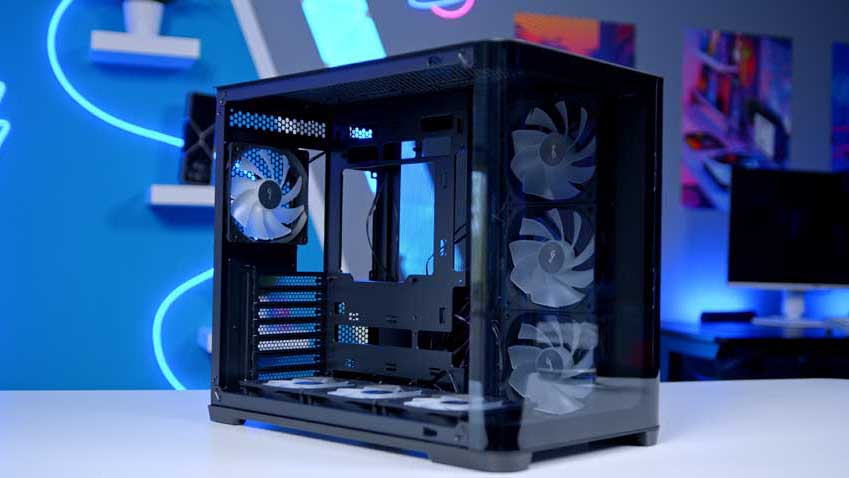
We’re housing this system in the SAMA V60 case, a mid‑tower chassis released in late 2025. Designed with a dual‑chamber layout, it isolates the PSU’s cooling from the main chamber to optimise airflow. Its standout feature is the curved tempered glass side panel that seamlessly wraps around to the front, delivering a striking 270° panoramic view of the internals.
The case arrives with seven pre‑installed fans and supports up to ten in total, ensuring ample cooling headroom. For liquid cooling fanatics, it accommodates 360mm radiators on either the top or bottom panel, giving you flexibility if our suggested cooler doesn’t suit your build. Also included with your purchase is a built‑in fan hub to further simplify cable management and control.
| Specification | SAMA V60 Case |
|---|---|
| Form Factor | Mid-Tower |
| Motherboard Support | ATX, Micro-ATX, ITX |
| Case Dimensions (L x W x H) | 475 × 285 × 389 mm |
| Front IO | 2 × USB 3.0 Type-A 1 × USB 3.1Type-C HD Audio Reset Button Power Button |
| PCI-E Slots | 7 |
| Colour | Black | White |
| Max Clearance | 160 mm Cooler Height 445 mm GPU Length 210 mm PSU Length |
| Drive Support | Up to 2 × 2.5 inch Up to 2 × 3.5 inch |
| Fan Support | Top: 3 × 120 mm Front: No Support. Side: 3 × 120 mm Bottom: 3 × 120 mm Rear: 1 × 120 mm |
| Radiator Support | Top: Up to 360 mm Front: No Support Side: Up to 280 mm Bottom: Up to 360 mm Rear: Up to 120 mm |
| Pre-Installed Fans | Top: 3 × 120 mm ARGB PWM Side: 3 × 120 mm ARGB PWM Rear: 1 × 120 mm ARGB PWM (7 fans total with hub) |
Future‑proofing is clearly part of the design philosophy. The front IO includes USB 3.1 Type‑C, and the chassis even supports reverse‑connect motherboards – though with our recommended motherboard, this feature isn’t worthy of extra thought right now. It does, however, leave room for seamless upgrades down the line.
If there’s one shortcoming, it’s the absence of a GPU support arm. With modern graphics cards trending toward longer, heavier cards, sagging is a genuine concern, and we’d like to see support arms become standard across cases with clearance to house these larger GPUs. It’s a minor gripe in an otherwise forward‑thinking design, but worth noting for builders who value long‑term stability.
PSU: SAMA P1000
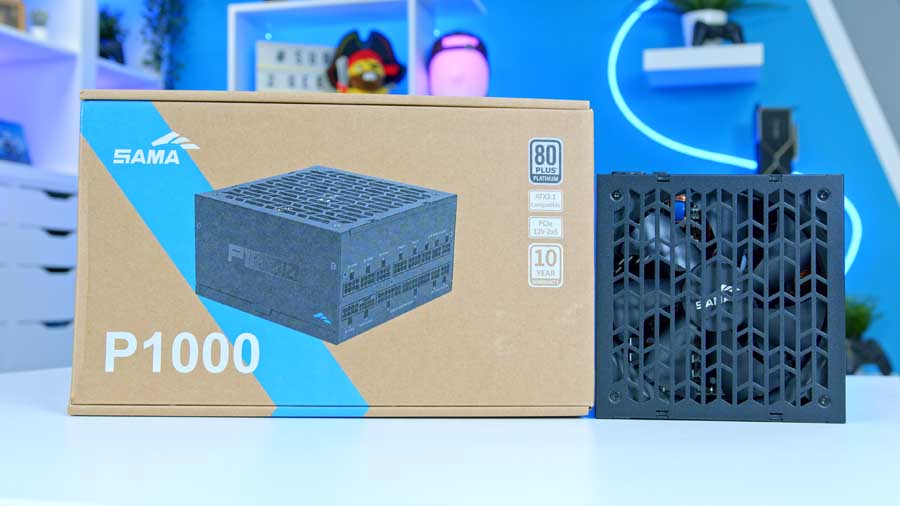
Last on our list of recommendations is the SAMA P1000. It’s a budget PSU that packs enough punch to power the Radeon RX 9070 graphics cards, and leaves you some room to upgrade your components in future. It is already future-proof, being ATX 3.1 compatible and PCIe 5.1 ready, and it is 80 PLUS Platinum certified, which is better than the typical 80 PLUS Gold certification, which we usually recommend. A design choice we particularly like about this PSU is the way SAMA has executed the cable design; they are flat-backed and have a braided pattern for extra protection and style, keeping the cables clean and sleek-looking within your build.
Gallery
Performance
Looking at the table, we can see that this rig is well-suited for high-framerate competitive gameplay at 1440p high graphics settings, even in newly released titles such as Arc Raiders and COD: Black Ops 7. In Arc Raiders, this system averaged 161.3 FPS, and even during stuttering, it stays well above 60 FPS, which is perfect because it won’t impact your gameplay even during graphically intense moments. COD: Black Ops 7 averages 167 FPS, which is a standout result! Even the 0.1% lows remain near 80 FPS, meaning competitive players can expect fluid responsiveness without dips that compromise aim or reaction time.
| Game Title | Average FPS | 1% Lows | 0.1% Lows |
| Arc Raiders | 161.3 | 108.7 | 85.3 |
| Battlefield 6 | 142.4 | 95.9 | 89 |
| COD: Black Ops 7 | 167 | 109.6 | 79.5 |
| Cyberpunk 2077 | 132.2 | 66.4 | 24.6 |
| Marvel Rivals | 140.1 | 108.7 | 97.5 |
| Fortnite (1080p Competitive) | 344.7 | 140 | 59 |
Cyberpunk 2077 is the most demanding title in the lineup, yet the rig still averages 132.2 FPS. The 1% lows at 66.4 and the 0.1% lows at 24.6 highlight occasional heavy dips in dense, intense scenes, but gameplay remains comfortably above 60 FPS in most scenarios. For a rasterisation‑only run at high settings, this is impressive headroom. Marvel Rivals posts an average of 140.1 FPS, with lows of 108.7 and 97.5. This system handles the title effortlessly. The tight spread between averages and lows suggests stable frame delivery, ideal for competitive play. With Fortnite, we always check performance at 1080p competitive settings, so it is expected to run at much higher framerates on a system built to target 1440p. With an average of 344.7 FPS, the 1% Lows remain at 140 FPS, and the 0.1% Lows are at 59 FPS. The combination of the AMD Ryzen 5 9600X and Radeon RX 9070 ensures that overall gameplay remains fluid and highly responsive, even for the most demanding competitive players.

![FI_[SR190] HYTE X50 Ryzen 5 9600X & MSI RTX 5070 Ti](https://geekawhat.com/wp-content/uploads/2026/01/FI_SR190-HYTE-X50-Ryzen-5-9600X-MSI-RTX-5070-Ti-551x431.jpg)
![FI_[DP064] ASUS Prime AP303 + 9070XT](https://geekawhat.com/wp-content/uploads/2026/03/FI_DP064-ASUS-Prime-AP303-9070XT-551x431.jpg)
![FI_[DM93] Corsair 3200D Launch](https://geekawhat.com/wp-content/uploads/2026/03/FI_DM93-Corsair-3200D-LAUNCH-551x431.jpg)