

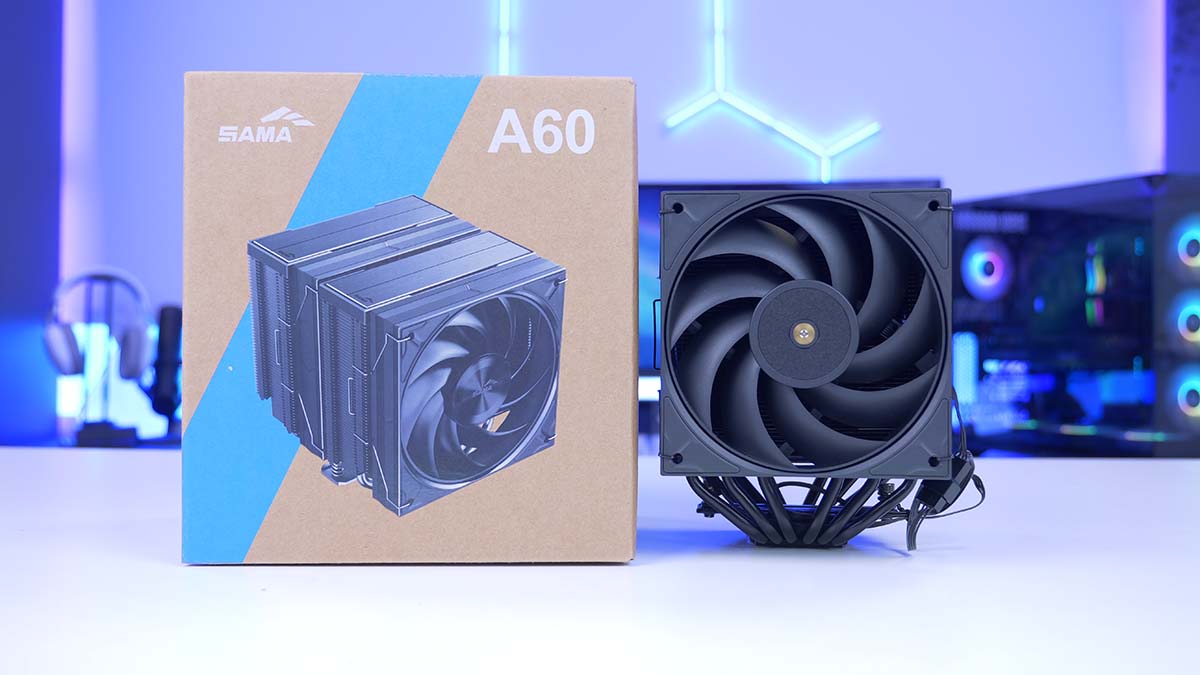
A CPU cooler is a vital component for maintaining system stability. It ensures your processor stays cool under load, and, since the CPU is essentially the brain of your PC, it’s clear why thermal management is key to peak performance. While a cooler can also help regulate overall system temperatures, that secondary role is less critical.
For most consumers, an All-In-One liquid cooler is the go-to solution, often praised for its efficiency in keeping gaming rigs thermally balanced. However, a well-designed air cooler can offer excellent thermal performance, quieter operation, and far more straightforward installation; all at a more accessible price point.
SAMA recently launched its A60 and A40 air cooler series, and in this review, we’re focusing on the SAMA A60B. Designed as a premium yet minimalistic option, the A60B combines sleek aesthetics with low-noise operation and high thermal performance. We’ll walk you through its specifications, share the results from our three-stage testing process, and conclude with our final impressions of the cooler.
Buy the SAMA A60 on:
Specification
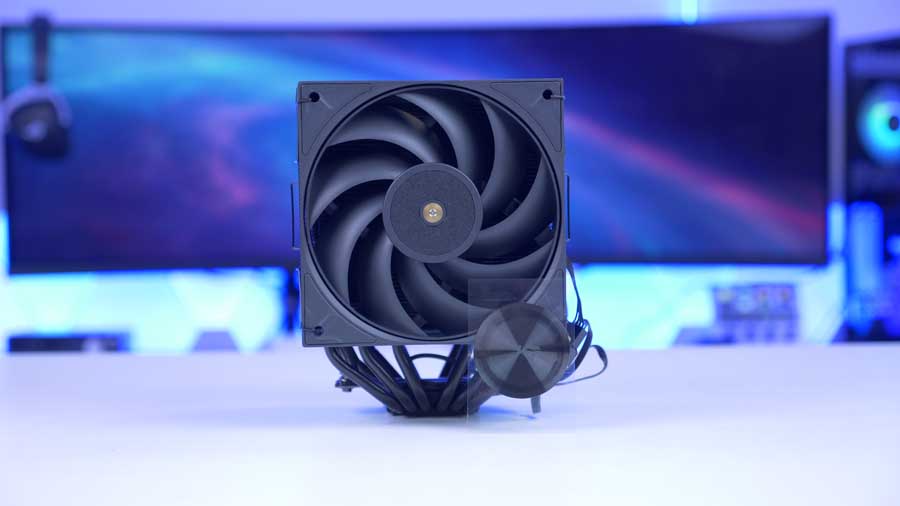
SAMA offers four versions of the A60: the A60B, A60W, A60E, and A60L. All models share the exact specifications and differ only in aesthetics. This cooler features a dual-tower design, which, in theory, doubles the cooling potential compared to a typical single-tower unit.
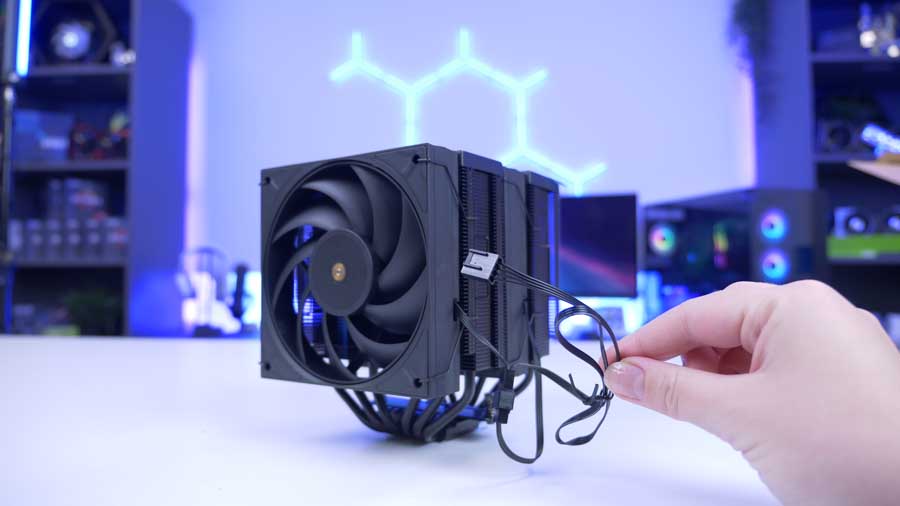
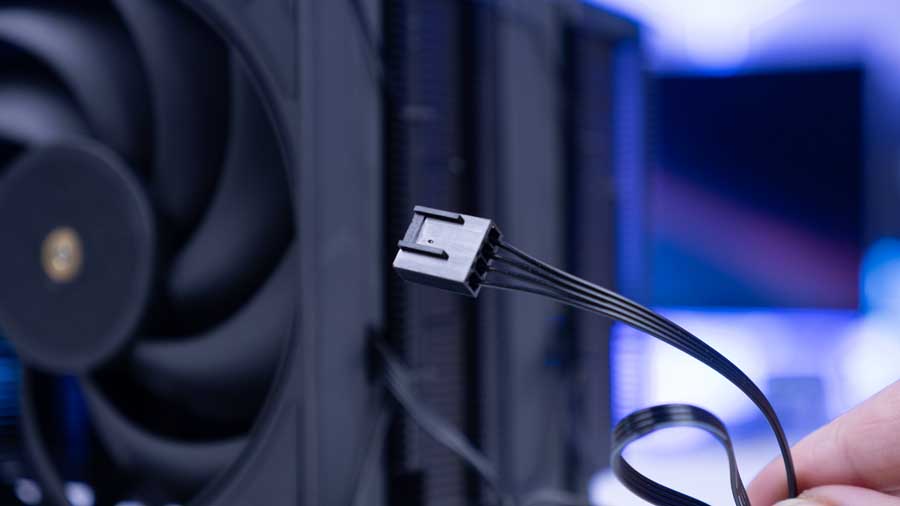
Looking at the spec table, the SAMA A60 stands out with its impressive 2200 RPM maximum fan speed. The best part is that both fans can reach that speed. Despite their performance, the noise level remains whisper-quiet at just 29 dB(A). Its fans rely on hydro bearings, a choice that emphasises durability and quieter operation by reducing friction over the long term. These fans are powered via 4-pin PWM connectors and sit approximately 42.5 mm above the motherboard PCB, providing solid RAM clearance.
| Key Specs | SAMA A60 |
|---|---|
| Cooler Height | 156.5 mm |
| RAM Clearance | 42.5 mm Above the Motherboard PCB |
| Number of Fans | 2 |
| Bearing Type | Hydro Bearing |
| Fan Connector | PWM (4-pin) |
| Max Fan Speed | 2200 RPM |
| Noise | 29 dB(A) |
| Socket Compatibility | Intel – LGA 115X, 1200, 1700, 1851 AMD – AM4, AM5 |
The SAMA A60 measures 156.5 mm in height, which makes it a solid fit for most mid‑tower cases while still offering the scale needed for strong thermal performance. In terms of compatibility, the cooler supports a wide range of sockets, including Intel’s LGA 115X, 1200, 1700, and 1851 platforms, as well as AMD’s AM4 and AM5, ensuring it can be deployed across both current and upcoming builds without issue.
SAMA A60 Design
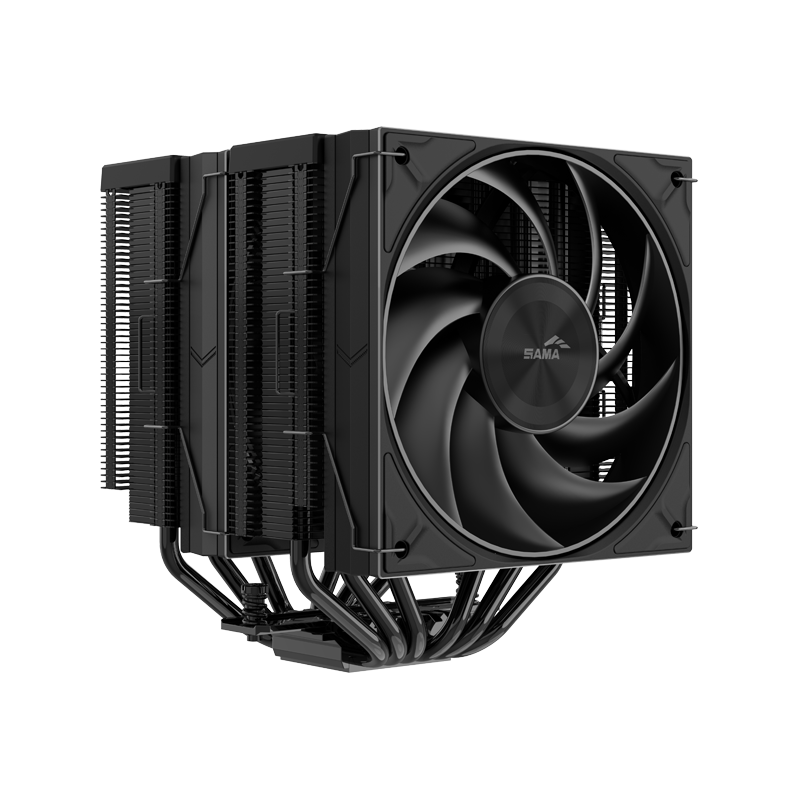
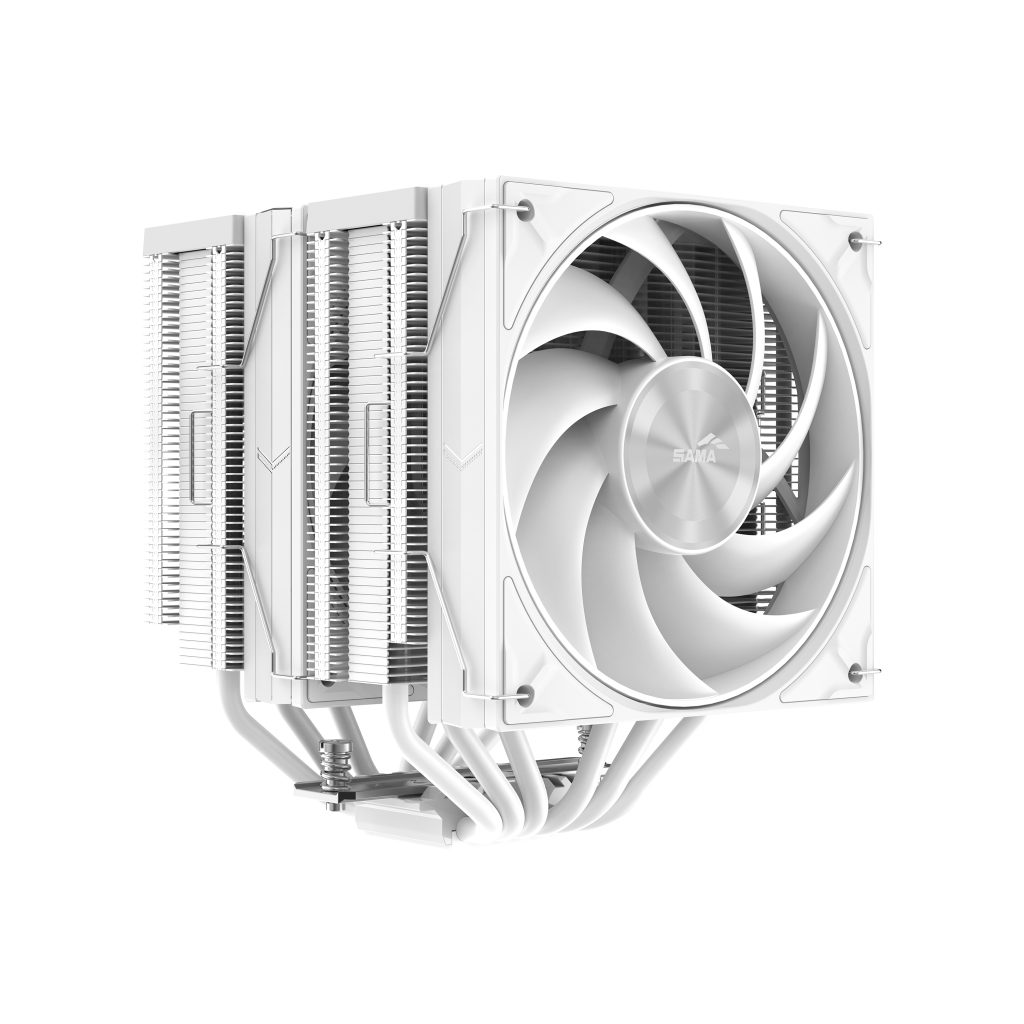
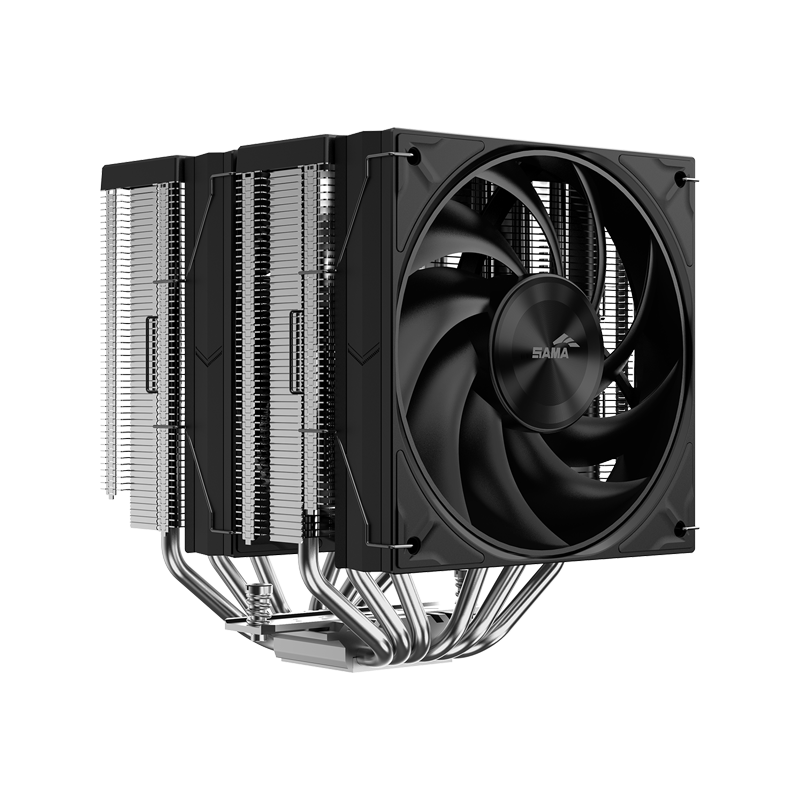
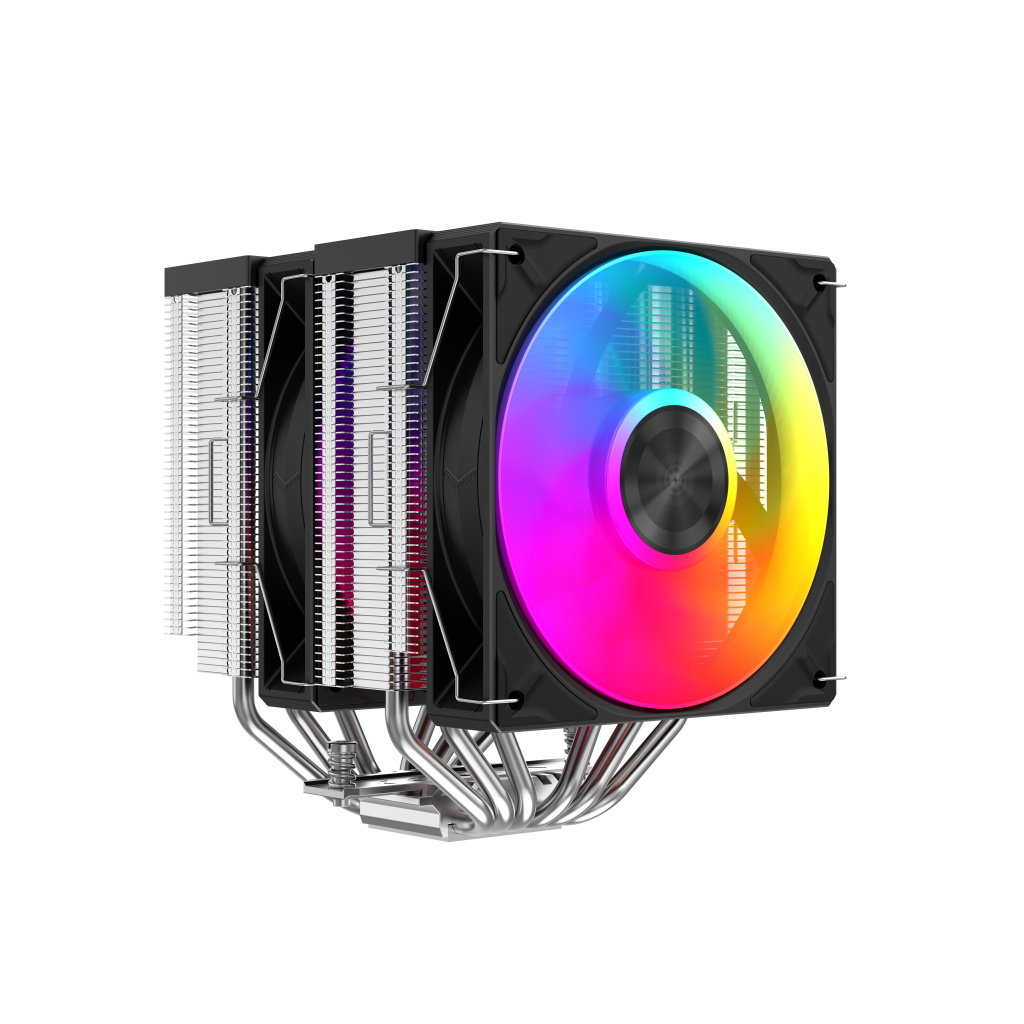
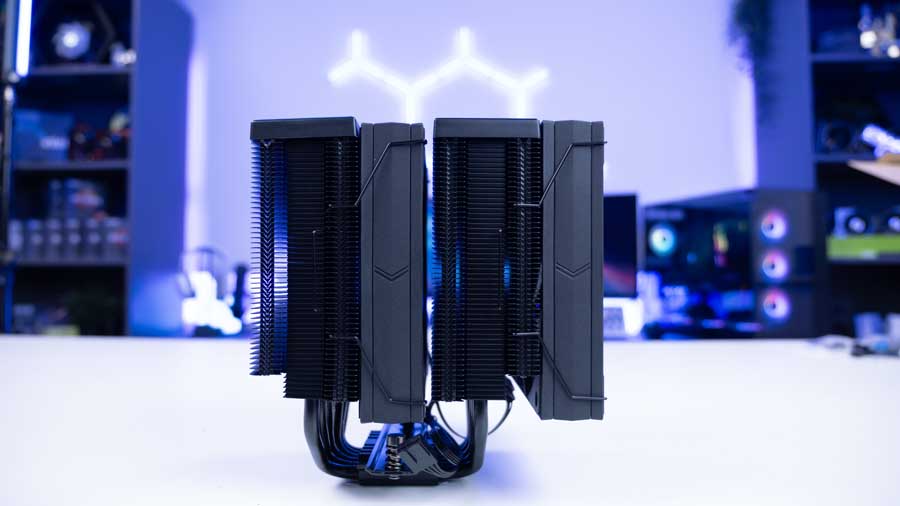
As mentioned, the SAMA A60 series is available in four versions that share the same specifications but differ in appearance. The A60W is finished in white, making it a good choice for lighter-themed builds. The A60E combines an all‑black frame with a silver radiator, creating a subtle two‑tone style that feels distinctive yet understated. The A60L introduces ARGB lighting, appealing to users who want customisable visual flair alongside strong cooling performance. Finally, the A60B is the entirely black edition, designed to deliver a clean and minimal aesthetic without any added lighting effects.
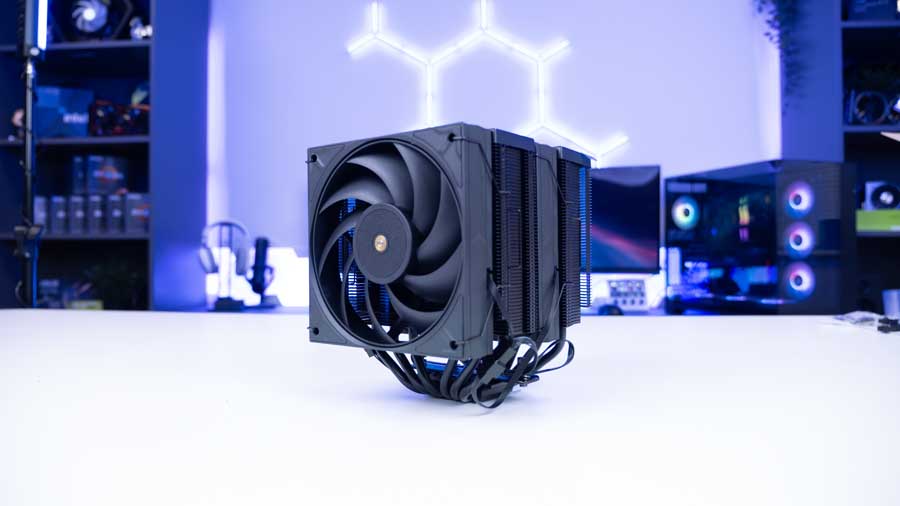
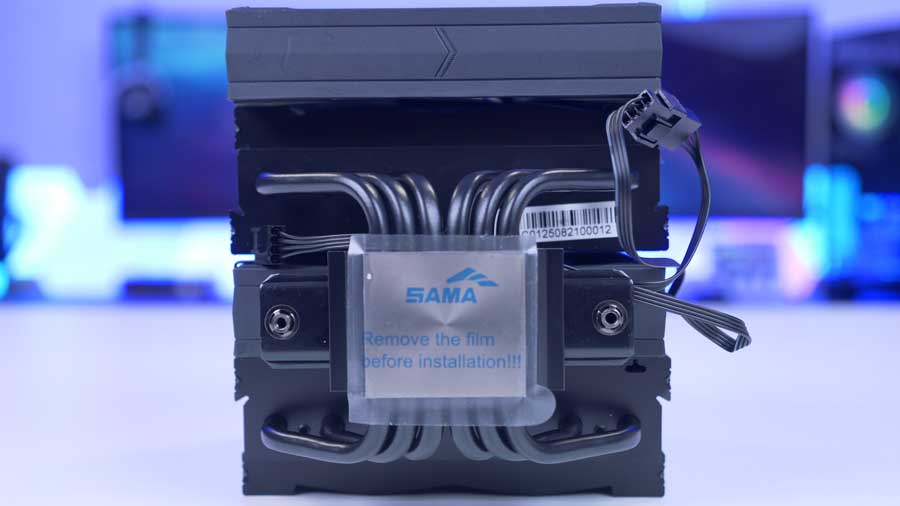
The SAMA A60 utilises an advanced cooling solution that is clearly designed with performance in mind. At its core, the cooler is equipped with six tightly integrated composite heatpipes that work in tandem with a nickel‑plated, pure-copper base plate. This combination ensures rapid heat transfer from the CPU to the towers, where it can be dissipated efficiently. The nickel plating not only improves thermal conductivity but also adds corrosion protection, helping the cooler maintain its effectiveness over time.
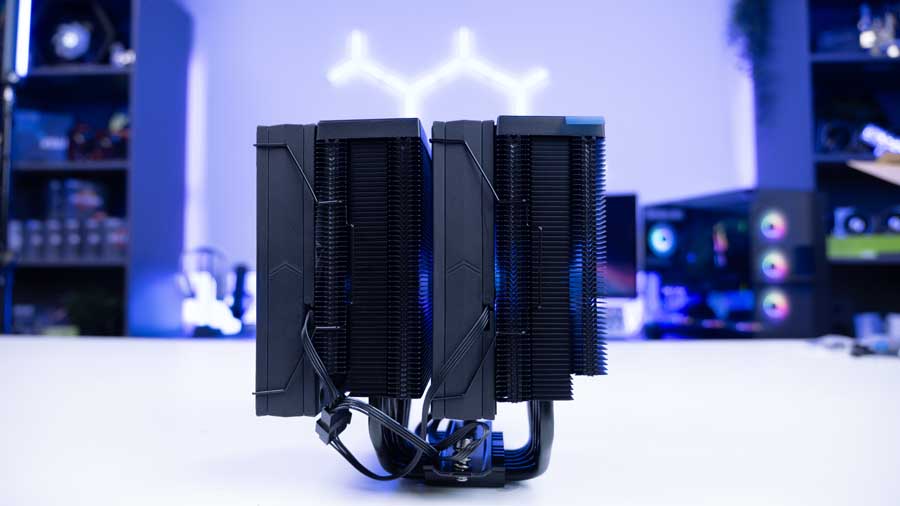
The A60’s fin construction is one of the standout features of this cooler. Rather than relying on a simple stacked fin array, SAMA has implemented a hybrid folded‑interlocked structure. This design increases the rigidity of the towers, preventing bending or warping, while also enhancing airflow dynamics. The result is a fin stack that is both durable and highly efficient at shedding heat, even under sustained workloads.
The fans themselves are particularly interesting in design. They use a guide‑ring structure that encircles the blades, reinforcing them against flexing at high speeds. This ring helps maintain consistent airflow and reduces turbulence, thereby lowering vibration and noise. When paired with the magnetically stabilised hydraulic bearings, the fans deliver smooth, quiet operation without sacrificing performance. SAMA has also opted for industrial‑grade PBT material in their construction, ensuring long‑term durability and resistance to heat and wear.
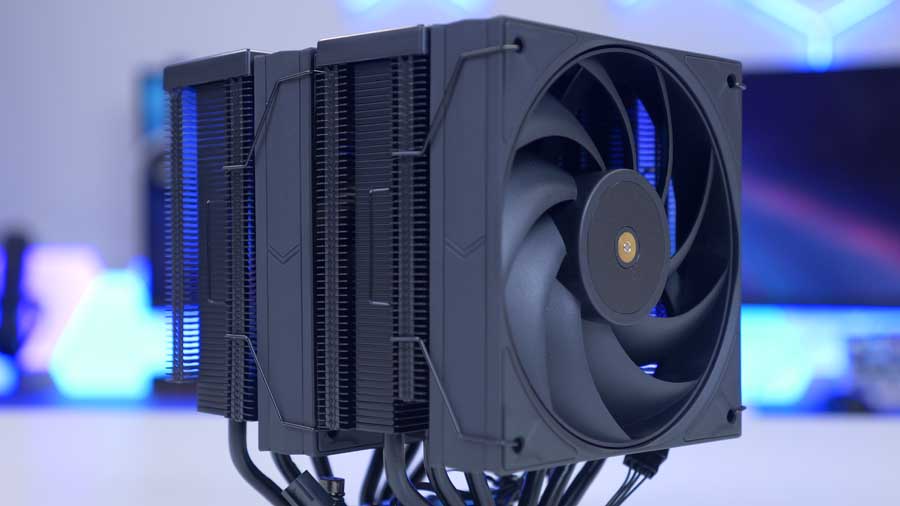
In terms of placement, one fan is mounted on the outside of the radiator while the second sits between the two towers. This push‑pull configuration maximises airflow through the fin stack, improving cooling efficiency. The fans’ height can also be adjusted, allowing users to raise or lower them when taller profile RAM modules interfere. This flexibility makes the cooler more adaptable to a broader range of system builds.
The installation process is straightforward and well‑documented. The included manual clearly outlines which mounting hardware is required for each supported socket, reducing the chance of confusion during setup.

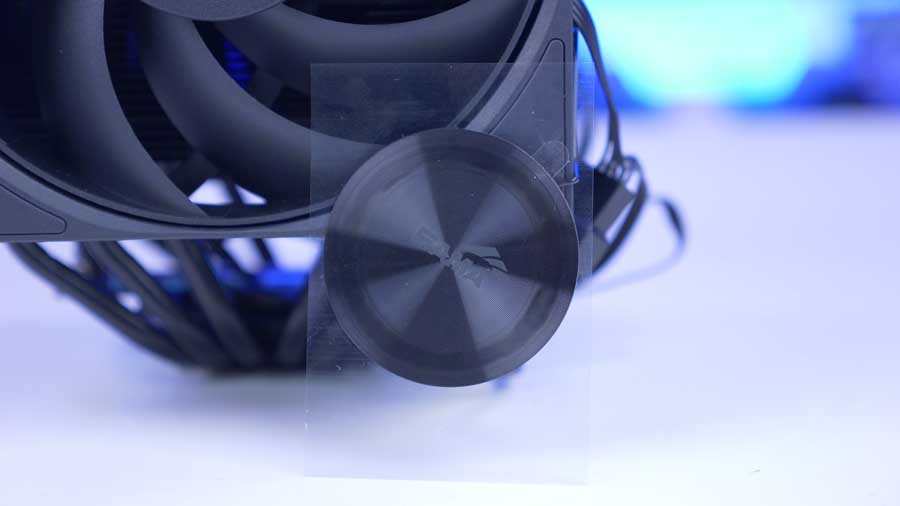
SAMA also provides some accessories, like their Freezee thermal paste and a branded fan cover, in the box. While it isn’t pre‑applied to the copper plate, the inclusion still saves users from having to purchase an additional tube and gives builders the freedom to apply as much or as little as needed.
Cooler Performance
Every CPU cooler we review is thoroughly tested within builds and a series of synthetic benchmarks. This provides performance data for each cooler, showing how it copes with gaming and multi-core workloads. The Intel Core i7-14700K is known to run hot, with a maximum operating temperature of 100℃. This is why our benchmarking system has an Intel Core i7-14700K at its core, with four 140mm fans to maximise airflow. Each cooler is set to the default fan curve mode in the BIOS, or we use an equivalent fan curve with the cooler’s software, so that testing is fair. All the data we collect is gathered from benchmarks in Cinebench and CPU-Z, with HWMonitor running in the background to record temperature information.
When presenting the results for air coolers, we also include 240mm AIO liquid-cooler results in the table, as often the reason consumers choose air coolers is that they can fit a 360mm cooler in their chassis, whereas they might be able to fit a 240mm AIO. Another thing to note is that 240mm tend to produce similar but slightly cooler averages than air coolers.
Cinebench 4-Thread
In our Cinebench R23 4‑thread test, the SAMA A60 records an average temperature of 69°C and a maximum of 72°C. This places it slightly hotter than the very top air coolers, such as the Thermalright Phantom Spirit 120 SE’s 61°C average and 66°C max, or the Noctua NH‑D15 Chromax Black’s 67°C average and 72°C max, but still firmly in the competitive range!
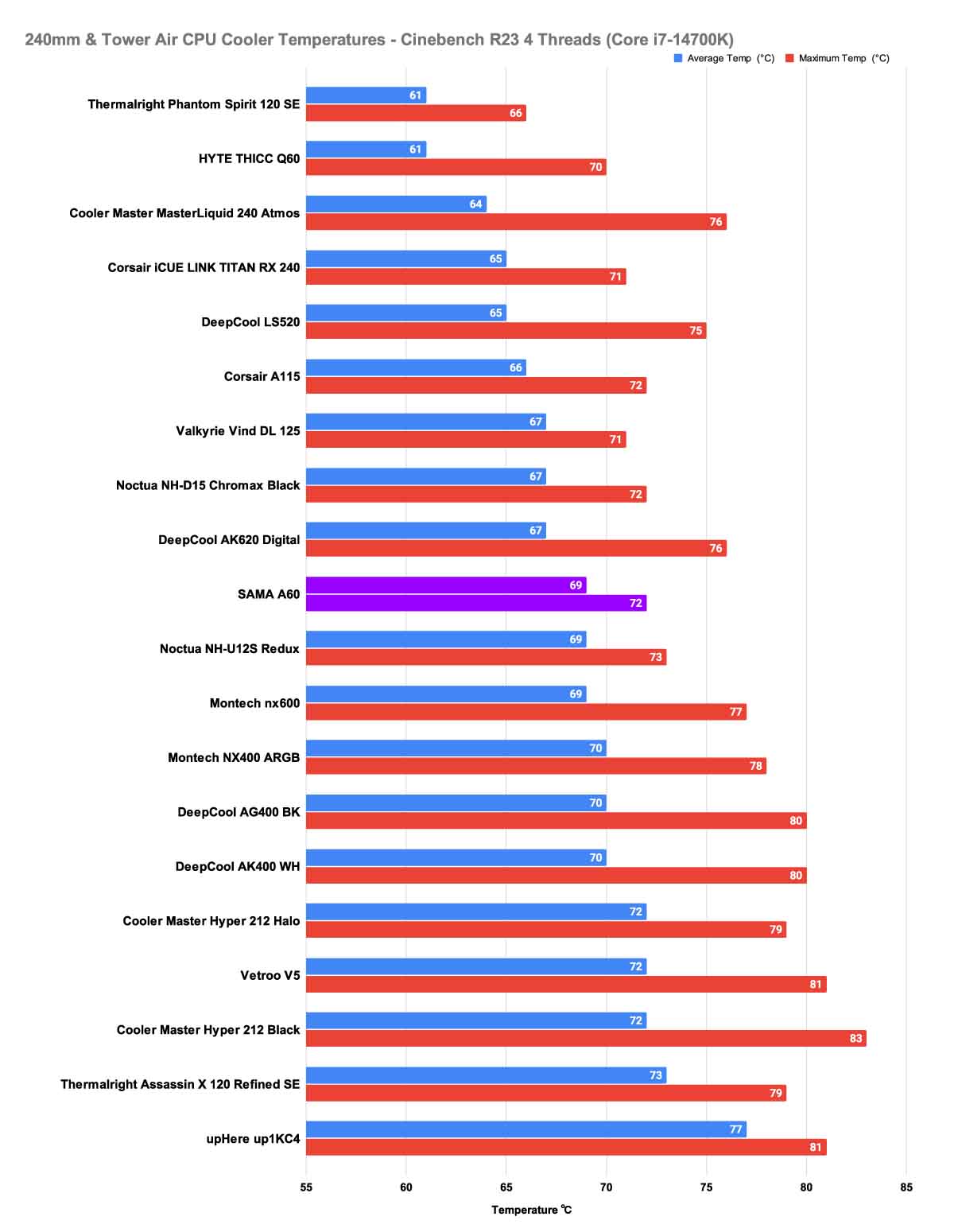
What is worth noting is that the A60’s peak temperature matches the NH‑D15, one of the most respected dual‑tower coolers on the market. The difference lies in the average, where the A60 runs a couple of degrees hotter, suggesting that while it can hold maximum spikes in check, its sustained thermal efficiency is slightly behind one of the very best.
Cinebench 8-Thread
The next test is Cinebench running with eight threads, a heavier workload than the four‑thread run. Here, the SAMA A60 posts an average of 85°C and a peak of 88°C. That result places it squarely in the middle of the group, warmer than the strongest dual‑tower designs such as the Thermalright Phantom Spirit 120 SE (74°C average, 80°C max) or Noctua’s NH‑D15 Chromax Black (78°C average, 82°C max), yet still ahead of budget coolers like the Hyper 212 Black (92°C average, 100°C max) or the Vetroo V5 (98°C average, 100°C max).
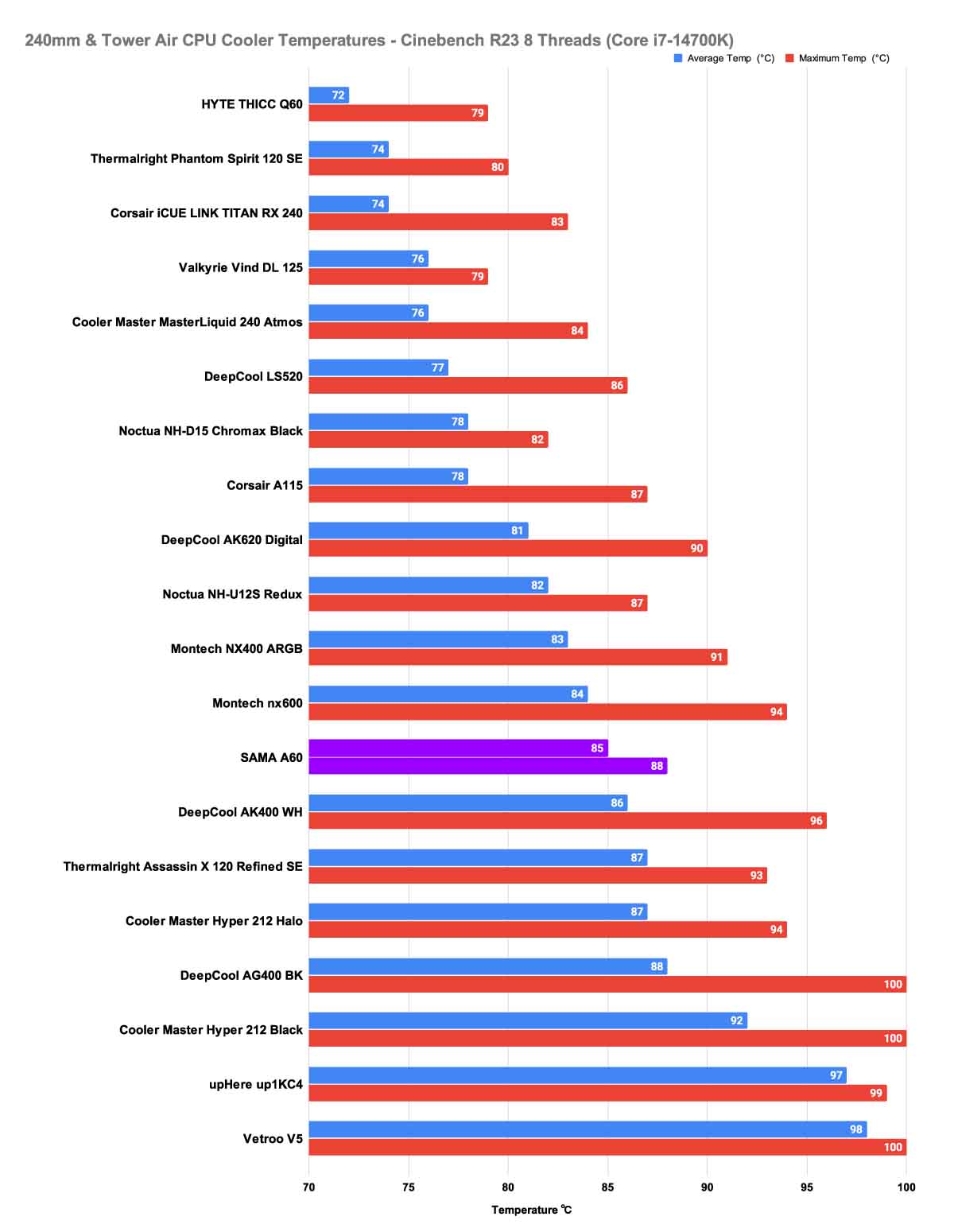
However, the cooler’s key strength is its stability under load. The minimal 3℃ gap between the average and maximum temperatures demonstrates remarkably steady thermal behaviour. This stability is a stark contrast to competitors that show dramatic temperature swings: the DeepCool AK620 Digital, for instance, climbs sharply from 81℃ to 90℃, and the Montech NX400 ARGB jumps by 8℃ (83℃ to 91℃). The A60 might not be the coolest overall, but its consistent temperature output makes it a highly trustworthy choice for long, demanding work or gaming sessions where minimising sudden spikes is critical.
CPU-Z 8-Thread
In the CPU‑Z 8‑thread test, the SAMA A60 records an average temperature of 85°C with a maximum of 87°C, lagging behind the market-leading air coolers such as the Phantom Spirit 120 SE with its 74°C average, 76°C maximum and the NH‑D15 Chromax Black’s 78°C average and 82°C max. However, it still manages to keep peak temperatures under control compared to many mid‑range and entry‑level units.
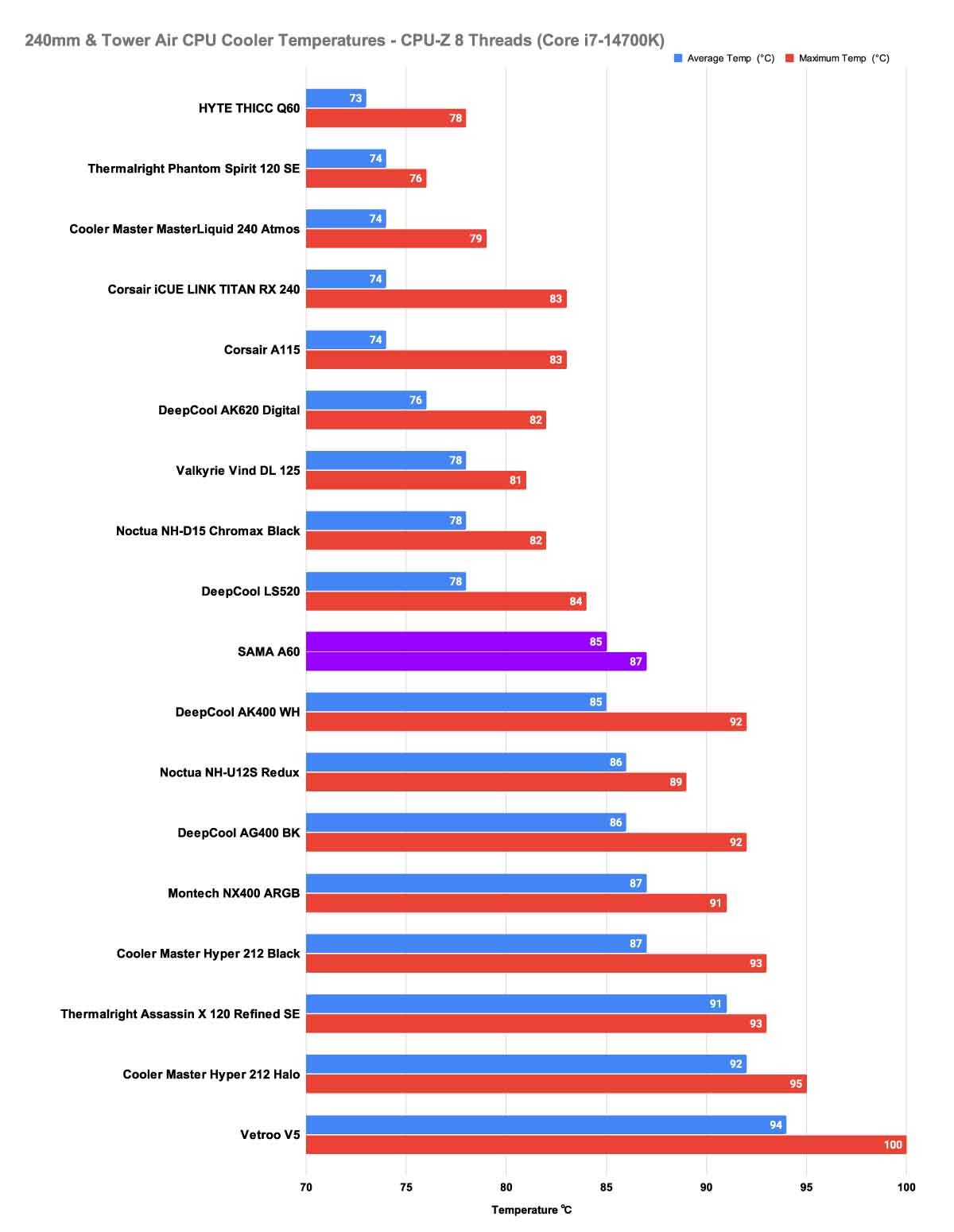
What’s notable here is the narrow gap between average and maximum temperatures. The A60 only rises by 2°C under full load, which indicates stable thermal behaviour and consistent heat dissipation. In contrast, coolers like the DeepCool AK400 WH climb from 85°C to 92°C, and the Cooler Master Hyper 212 Black jumps from 87°C to 93°C. This shows that while the A60 runs hotter overall, it avoids the larger spikes that can affect system stability.
Overall, against 240 mm AIOs, the A60 trails significantly in average temperature, as expected given the efficiency advantage of liquid cooling. Within the air cooler category, the A60’s performance is closer to mid‑tier towers like the DeepCool AK400 WH or the Noctua NH‑U12S Redux, but with slightly better control over maximums.
Conclusion
SAMA A60 Air Cooler
Product Name: A60
Brand: SAMA
-
Features
-
Design
-
Performance
-
Value For Money
Summary
Across our testing, the SAMA A60 proved to be a consistent and dependable unit. Whilst it doesn’t compete with the top air coolers on the market in raw thermal performance, its dual‑tower design and high‑speed fans keep maximum temperatures under control even when compared to the hot-running Intel Core i7-14700K, making it a sensible choice for consumers who value steady cooling and quieter operation over reaping the lowest averages. It sits comfortably in the mid‑range of air coolers, offering a balance of performance and refinement that suits both gaming and productivity systems.
The cooler has also been engineered with some thoughtful, practical touches that make installation easier. It has adjustable fan heights to help avoid clearance issues with taller RAM modules, and installation is straightforward thanks to a clearly illustrated manual and well‑labelled mounting hardware. With the A60B variant, setup is even more concise, requiring only two CPU_FAN connections. The purchase of a SAMA A60 also includes a tube of thermal paste in the box, giving builders everything they need without the extra purchase. Simplicity at its finest!
Altogether, the SAMA A60 is a cooler that prioritises reliability and thoughtful design. It may not lead the charts, but it delivers stable performance, intuitive installation, and a few smart conveniences that make it a dependable option for anyone building a mid‑range PC.
Pros
✅ Affordable
✅Premium design across all SKUs
✅ High fan max speed
✅ Straightforward installation
Cons
❌ Might benefit from costing less
❌Low brand recognition
❌ Tall Cooler height

![FI_[DP055] SAMA V60 + 9070 Build](https://geekawhat.com/wp-content/uploads/2025/12/FI_DP055-SAMA-V60-9070-551x431.jpg)