
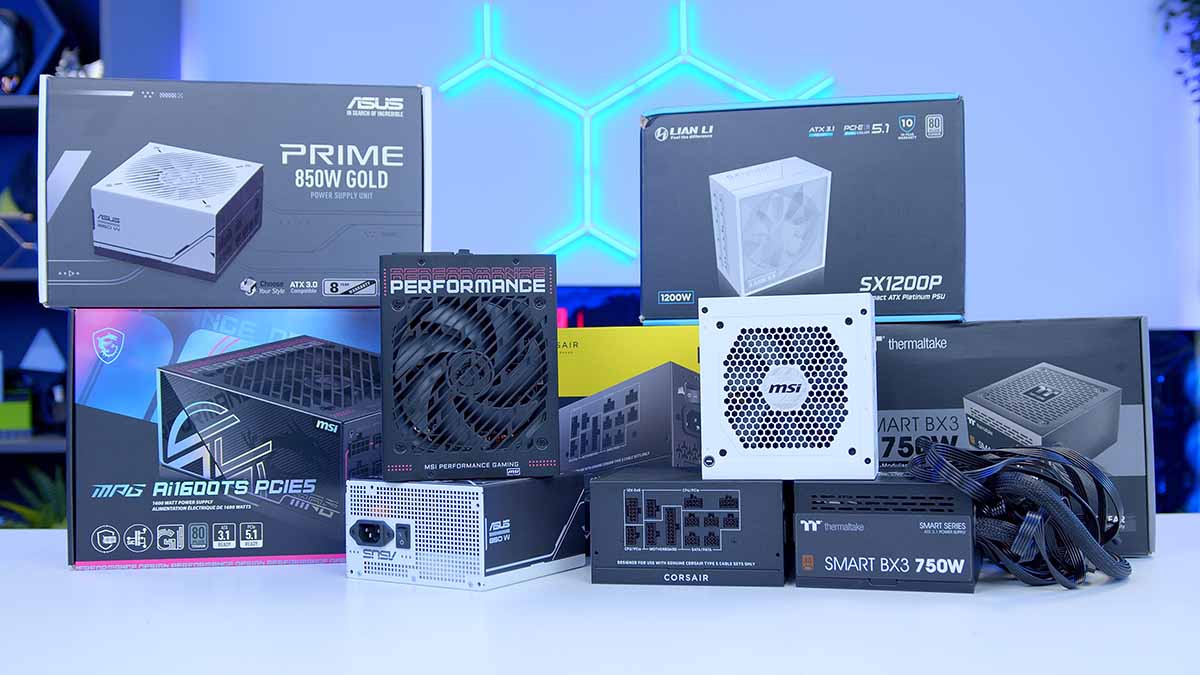
When putting together the ultimate PC build, the power supply is a component that can quite literally go unnoticed. However, the PSU is essential to any system, as it provides the other components with the power they need to perform at their best. Because of this, it’s vital for builders to choose a reliable, efficient PSU that provides enough wattage to power the build comfortably.
The issue is that when searching for the best PSUs on the market, there are several variables to consider, including budget, form factor, efficiency, modularity and wattage requirement. Each of these factors can have a major impact on the value and practicality of a power supply. Because of this, we decided to test a wide range of products to create an extensive breakdown of the best PSUs on the market.
The best place to start is the wattage requirement, and to figure out how much your system needs, there are a few ways of working this out; you can use a number of PC power requirement calculators, like Newegg’s PC Power Supply Calculator, or you can look at your graphics card’s recommended overall wattage spec.
Best Power Supplies to Buy
1. MSI MPG AiTS PCIE5 Series
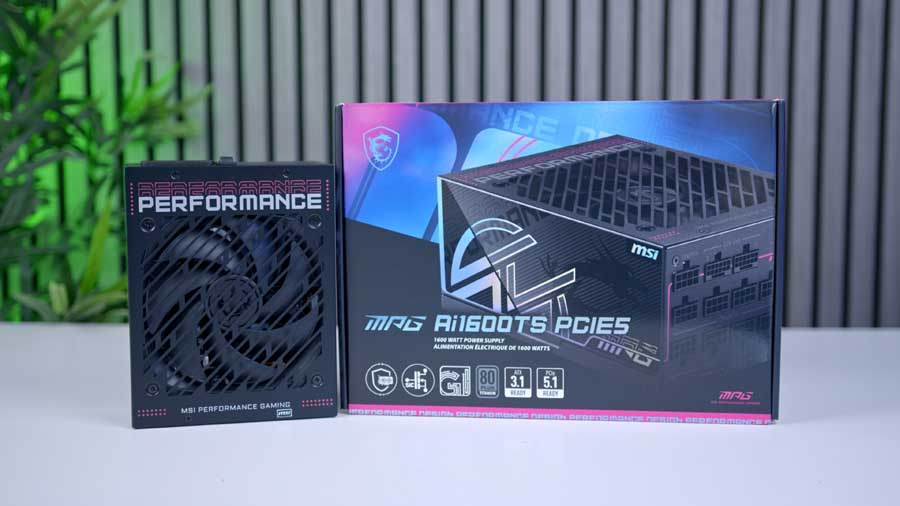
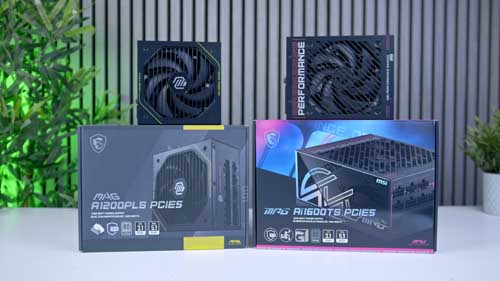
This power supply is a new entry to MSI’s arsenal of power supplies. There are two very powerful PSUs being released in this series. These are the MPG Ai1300TS PCIE5 and the MPG Ai1600TS PCIE5 with capacities of 1300W and 1600W, respectively. Both of these power supplies have an ATX form factor, and they measure 190mm in length, 150mm in width and 86mm in height.
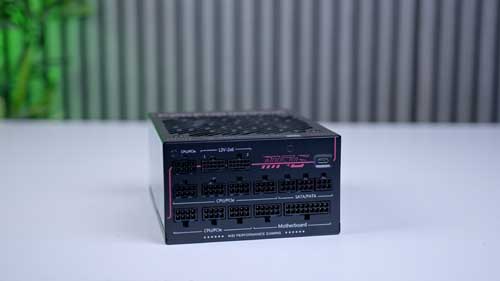
These PSUs are enthusiast-grade components, built to support NVIDIA GeForce RTX 50-series graphics cards and even workstation cards like the NVIDIA RTX PRO 6000. What’s great is that the 12V-2×6 connector for some of the most recent graphics cards is yellow-coloured, so you can tell if the cable is connected properly.
| Key Specs | MSI MPG AiTS PCIE5 Series |
|---|---|
| Size | ATX |
| Dimensions (L x W x H) | 190 x 150 x 86 mm |
| Wattage | 1300W, 1600W |
| Efficiency Rating | 80 PLUS Titanium |
| Modularity | Fully-modular |
| Certifications | ATX 3.1, PCIe 5.1 |
| Fan Size | 135mm |
| Zero-Fan Mode | Yes |
| Warranty | Not disclosed |
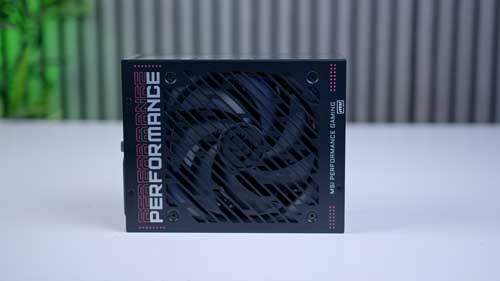
This power supply features a low-noise output design with a zero-fan mode for low-load conditions, where the fans stop spinning and there’s no noise. The 135mm fan also features fluid-dynamic bearings, which help reduce noise and improve thermal performance.
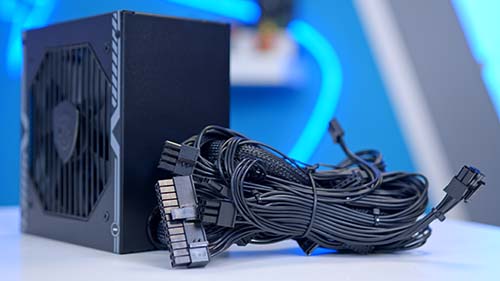
MSI has put some thought and care into the design of the power supply cables as well. Firstly, the unit is completely modular, which means less cable management. The cables are embossed to make them more flexible and bendable. There are also pre-installed cable combs that neatly align and streamline cable management. All of these features contribute to a faster, easier cable management process.
The MSI MPG AiTS PCIE5 Series is ATX 3.1 certified and PCIe 5.1 compatible, and it carries an 80 PLUS Titanium rating – the highest efficiency tier – meaning it can convert up to 94% of incoming power into usable energy under typical loads, and still maintain at least 90% efficiency even when the system is only drawing around 10% of its capacity.
With holographic detailing along the sides, the power supply delivers a striking visual presence, while the rest of the chassis stays sleek in black, accented by pink and silver text that scales elegantly across the unit. It looks every bit as impressive as its specifications suggest – truly outstanding. Although it isn’t available for purchase yet, having only been shown as a teaser at CES 2026 in January, it’s definitely a product worth keeping an eye on.
2. Gigabyte AORUS ELITE P Series (Rev 1.1)
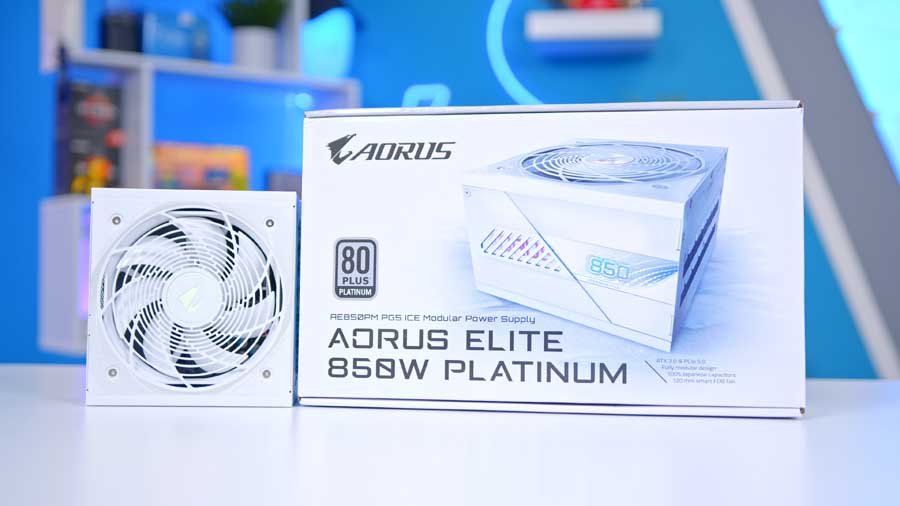
The latest Gigabyte AORUS ELITE Series is available in 850W and 1000W options, with both black and white versions. This update finally brings the lineup up to full ATX 3.1 and PCIe 5.1 support, a welcome improvement over the older Rev 1.0 models, which only offered ATX 3.0 and PCIe 5.0. In practice, this means better alignment with current‑generation GPUs and a bit more future‑proofing for whatever comes next.
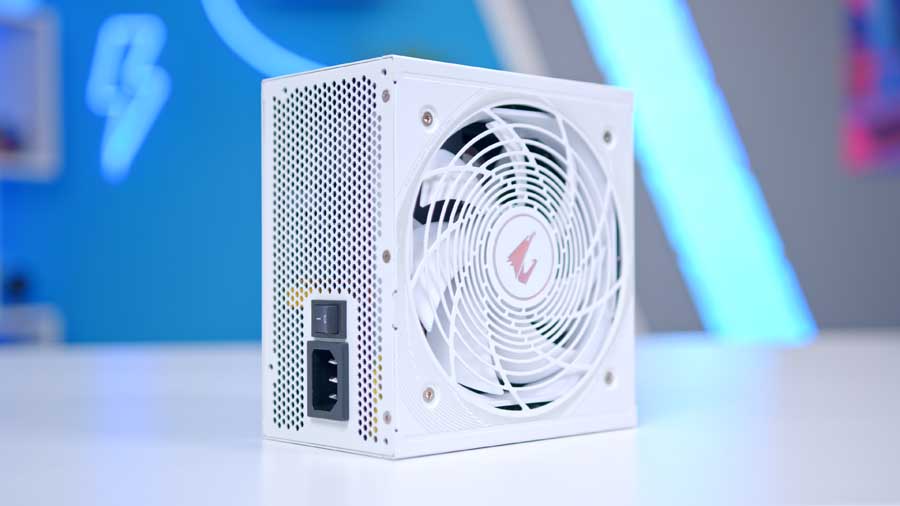
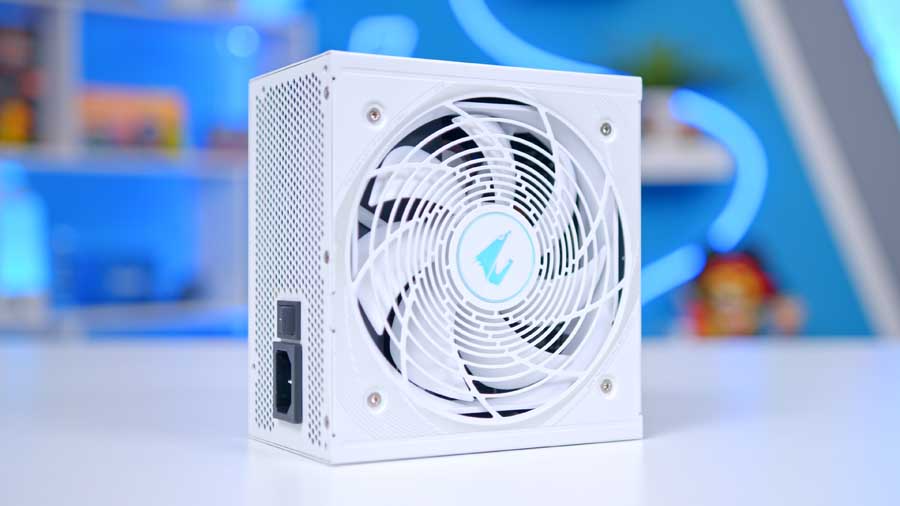
Gigabyte has also leaned more into its visual design than most brands. The PSU includes holographic accents on the fan shroud and a magnetic AORUS plate that can be repositioned on different sides of the unit depending on how you want it to look inside your case. It’s a small touch, but it gives builders more control over presentation, especially in cases with unconventional PSU orientations. Despite the styling, the unit remains compact at just 140mm in length, making it easier to fit into a tighter chassis without sacrificing airflow or radiator clearance.
| Key Specs | Gigabyte AORUS ELITE P Series |
|---|---|
| Size | ATX |
| Dimensions (L x W x H) | 140 x 150 x 86mm |
| Wattage | 850W, 1000W |
| Efficiency Rating | 80 PLUS Platinum |
| Modularity | Fully-modular |
| Certifications | ATX 3.1, PCIe 5.1 |
| Fan Size | 120mm |
| Zero-Fan Mode | Automatic |
| Warranty | 10 Years |
Efficiency is another strong point. With an 80 PLUS Platinum rating, the AORUS ELITE can convert up to around 92% of incoming power into usable energy under typical loads. That means less wasted heat, lower fan noise, and better overall performance for high‑end systems. The fully modular cable setup keeps things clean and manageable, and the 120mm fluid dynamic bearing fan helps with long‑term reliability. It also supports a zero‑fan mode, so the fan stays completely off during light workloads, keeping the system silent when it doesn’t need active cooling.
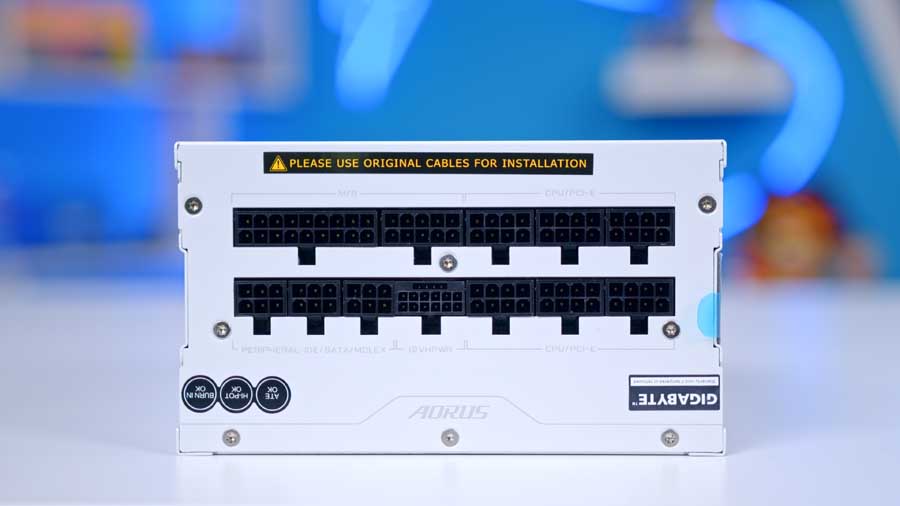
If there’s one thing that holds this PSU back from being visually perfect, it’s the white version’s cable ports. The cables have white connector ends, but the modular ports on the PSU housing remain black. It’s not a functional issue, but it does break the aesthetic consistency a bit. Many brands cut corners here to save on manufacturing costs, but in this case, it feels more like an oversight, especially when the rest of the design is so intentionally styled.
Suggested Article: Best All-AMD Gaming PC Build (FT. Gigabyte AORUS Elite 850W Platinum)
3. Lian Li SX Platinum Series
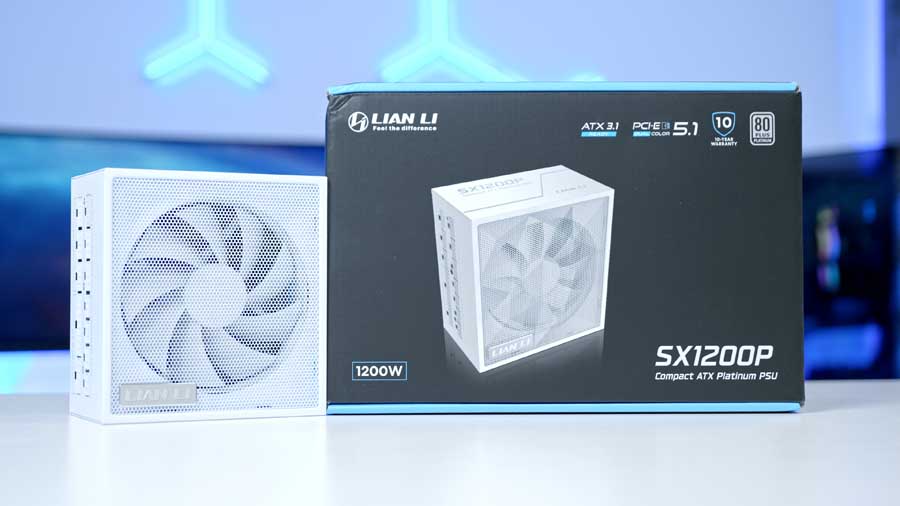
The Lian Li SX Platinum Series offers specifications very similar to those of the Gigabyte AORUS ELITE Series. The form factor is ATX, and the dimensions are the same. It also has an 80 PLUS Platinum rating, is fully modular, features a 120mm fan with fluid dynamic bearings, and is ATX 3.1 certified and PCIe 5.1 compatible.
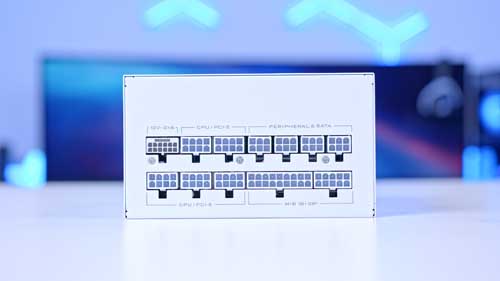
The difference is that the Lian Li SX Platinum Series increases the wattage capacity, offering a 1200W model that provides slightly more future-proofing and versatility. Also, this unit can support three PCIe 6+2 cables for high-end AMD graphics cards, and the 12V-2×6 connector is dual-coloured with a blue tip, which helps ensure it is plugged in all the way to avoid misconnection failures, as these cables can carry up to 600W alone!
A slight issue I can see some prospective purchasers disliking is the Zero-RPM mode, which stops the fan from spinning completely if not under load. Some people may prefer that the unit at least has a low number of fan rotations to keep air flowing constantly for reassurance.
| Key Specs | Lian Li SX Platinum Series |
|---|---|
| Size | ATX |
| Dimensions (L x W x H) | 140 x 150 x 86mm |
| Wattage | 850W, 1000W, 1200W |
| Efficiency Rating | 80 PLUS Platinum, PPLP Platinum certified |
| Modularity | Fully-modular |
| Certifications | ATX 3.1, PCIe 5.1 |
| Fan Size | 120mm |
| Zero-Fan Mode | Yes |
| Warranty | 10 Years |
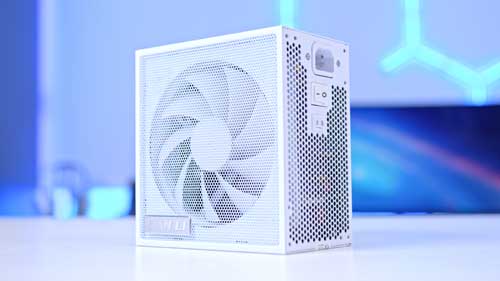
This series also takes on a completely different aesthetic from the Gigabyte power supplies, refining the look to feel slightly more mature and minimalist, making it a good option for builds where you might not be able to see the power supply. It’s a premium offering from Lian Li, with equally impressive specs, which is why it earns its place among the best PSUs.
Suggested Article: Building an Enthusiast-Grade PC Build for 2026! (FT. Lian Li SX1200P White)

4. Corsair RMe (2025) Series

Suggested Article: Building an affordable 4K Gaming PC in 2026! (FT. Corsair RM750e (2025) Black)
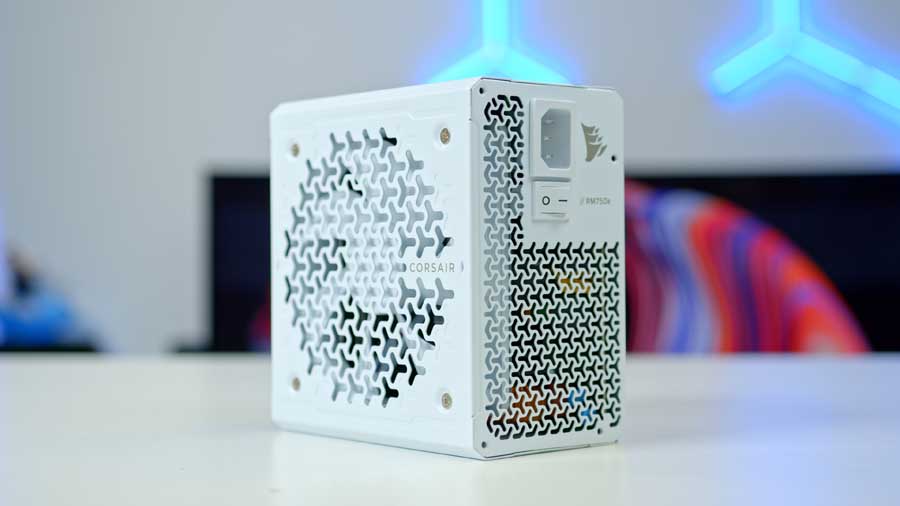
Corsair’s RMe (2025) Series has become one of those power supplies we keep coming back to because it fits into almost any build without fuss. It’s available in wattages from 650W up to 1200W, and both the black and white versions are easy to match with a wide range of components. The white model, in particular, stands out because it’s one of the very few PSUs that actually commit to a full white design. The housing, the modular ports, the cable sleeves, and even the connector tips are all white, which gives it a much cleaner and more cohesive look than most “white” units that still hide black plastic somewhere.
The size makes it even more flexible. At 140mm long, 150mm wide, and 86mm tall, it’s compact for its wattage class, which helps when you’re working in tighter cases or trying to keep room for front‑mounted radiators. Despite the smaller footprint, it still includes all the modern features you’d expect from a 2025‑era PSU: fully modular cables, support for current GPU power standards, and a fan profile that stays quiet during everyday use.
| Key Specs | Corsair RMe (2025) Series |
|---|---|
| Size | ATX |
| Dimensions (L x W x H) | 140 x 150 x 86 mm |
| Wattage | 650W, 750W, 850W, 1000W, 1200W |
| Efficiency Rating | Cybenetics Gold-certified efficiency |
| Modularity | Fully-modular |
| Certifications | ATX 3.1, PCIe 5.1 |
| Fan Size | 120mm |
| Zero-Fan Mode | Yes |
| Warranty | 7 Years |
One thing worth pointing out is that this unit doesn’t use Japanese capacitors throughout the design. The other power supplies we’ve recommended rely heavily on Japanese caps for their reputation for long‑term reliability and heat tolerance. The RMe still performs well and meets its efficiency targets, but buyers who prioritise top‑end internal components may see this as a trade‑off.
The efficiency rating is Cybenetics Gold, which lines up closely with 80 PLUS Gold in real‑world terms. That means it runs efficiently under typical loads, keeps heat output under control, and doesn’t need to ramp the fan aggressively unless you’re pushing the system hard. For most gaming or productivity builds, it’s more than enough.
Overall, the RMe (2025) Series earns its place as a go‑to recommendation because it’s easy to fit, easy to build with, and visually consistent in a way most PSUs aren’t – especially the white version. It’s a practical choice for budget to high‑end systems, and the all‑white option makes it especially appealing for anyone building around a clean, themed aesthetic.
Suggested Article: Building the Cleanest-Looking 4K-ready PC! (FT. Corsair RM850e (2025) White)


5. MSI MAG ABN Series

MSI MAG A550BN.
MSI MAG A650BN.
MSI MAG A750BN.
Suggested Article: Best PSUs to Buy for the RTX 5070
This is a great PSU if you’re looking for something that simply gets the job done without any complications. It’s reliable, affordable, and perfectly suitable for budget‑ to mid‑range graphics cards. You’re not getting premium features or cutting‑edge standards here, but that’s the point – it’s a no‑nonsense unit for straightforward builds where cost and simplicity matter more than future‑proofing.
Because it’s an older model, it doesn’t inherently support the latest GPU power standards. There’s no native 12VHPWR or 12V‑2×6 connector, so you’ll be relying on adapters if you plan to pair it with anything beyond the mid‑range GPUs. MSI has since released two updated versions, the MAG ABN II and MAG ABN III series, both of which add full ATX 3.1 and PCIe 5.1 compatibility. Those revisions are better suited for newer hardware, but this original model still holds up well for more modest systems.
| Key Specs | MSI MAG ABN Series |
|---|---|
| Size | ATX |
| Dimensions (L x W x H) | 140 x 150 x 86 mm |
| Wattage | 550W, 650W, 750W |
| Efficiency Rating | 80 PLUS Bronze up to 85% |
| Modularity | Non‑modular |
| Certifications | ATX 12V, PCIE 3.0 |
| Fan Size | 120mm |
| Zero‑Fan Mode | No |
| Warranty | 5 Years |
The PSU uses the standard ATX form factor and has a compact footprint of 140 × 150 × 86 mm, helping ensure compatibility with smaller cases. However, the non‑modular design means every cable is permanently attached, and that can create cable‑management headaches, especially in tighter chassis or builds where you only need a few of the available connectors. It’s not unmanageable, but it’s definitely less convenient than the fully modular designs that have become common in newer units.
The warranty is another reminder that this is an entry‑level product. You get five years of coverage, which is fine for the price but noticeably shorter than the 10‑year warranties that have become standard on most modern mid‑range and high‑end PSUs. The cooling setup also reflects its budget positioning, using a sleeve‑bearing fan instead of the longer‑lasting FDB or rifle‑bearing fans found in more premium models. It will do the job, but it’s not built for the same long‑term durability.
Lastly, the MSI MAG ABN Series carries an 80 PLUS Bronze certification, which indicates around 85% power efficiency under typical loads. In practical terms, this means that for every 100 watts drawn from the wall, about 85 watts are delivered to your components while the remaining 15 watts are lost as heat. It’s not as efficient as the Gold, Platinum or Tiantium‑rated units we’ve covered above, but it’s perfectly acceptable for an entry‑level PSU and helps keep the overall cost down.
Suggested Article: Building an Affordable Gaming PC for 2026! (FT. MSI MAG A650BN)